Where does your company disappear from the decision?
Find where you lose the decision.
Follow a realistic customer request through the sources, evidence, recommendation and seller choice. Invest where the decision breaks down, then check whether the outcome changes.
This is a suggested direction based on archival research, not a promise of a future discovery. No automatic monitoring has been started.
Architecture described: Product choice and merchant choice are separate
Architecture describedOpenAI describes shopping relevance as depending on user context, supplied metadata and other information. Its merchant rankings additionally consider availability, price, quality and maker or primary-seller status.
Scope and conditions: One vendor’s documented behaviour; no public universal ranking formula or guarantee of inclusion.
Vendor claim · origin, not a quality ratingSource passage · 2026Separates product relevance from merchant selection. Documentation describes inputs, not disclosed ranking weights.
How product results are selected; How merchants are selected About the source and its version
What changed, and why.
This history comes from saved content versions. A new revision can be an editorial change; it does not by itself mean that the underlying facts changed.
Editorial change · revision 6
Removes a reference to the retired drafting guide; the strategic guidance and its limitations are unchanged.
Compare revision 5 with 6
Inline visual: Build a reason to choose you. Make sure it reaches the decision.
A sequence of commercial decisions · Atlas recommendations Now · choose the customer situation • Define a winning situation — Name the customer, task, market and reason your offer deserves preference. • Locate the loss — Observe real search and recommendation paths. Record what was available, not just whether your name appeared. Next · test the advantage • Change one bottleneck — Improve relevant proof or its accessibility; keep the underlying comparison explicit. • Repeat the comparison — Vary realistic requests, models, language and market. Preserve versions and failures; one favourable answer proves little. Scale · follow the value • Connect to outcomes — Check seller selection, completed work or orders, margin, returns and repeat use where observable. • Expand when it pays — Extend distribution when customer demand and economics justify it. Recheck after important platform changes. This is strategic guidance, not an Atlas-tested growth programme. The separate drafting guide tests a much narrower task.
A sequence of commercial decisions · Atlas recommendations Now · choose the customer situation • Define a winning situation — Name the customer, task, market and reason your offer deserves preference. • Locate the loss — Observe real search and recommendation paths. Record what was available, not just whether your name appeared. Next · test the advantage • Change one bottleneck — Improve relevant proof or its accessibility; keep the underlying comparison explicit. • Repeat the comparison — Vary realistic requests, models, language and market. Preserve versions and failures; one favourable answer proves little. Scale · follow the value • Connect to outcomes — Check seller selection, completed work or orders, margin, returns and repeat use where observable. • Expand when it pays — Extend distribution when customer demand and economics justify it. Recheck after important platform changes. This is strategic guidance, not an Atlas-tested growth programme.
Sources used before
- Shopping with ChatGPT Search ↗Live documentation consulted 23 October 2026 · How product results are selected; How merchants are selectedPublished 2026 · recorded in Atlas 23 October 2026
- Agentic Shopping is Complicated and Contingent ↗Laboratory technical-report page; consulted 23 October 2026 · How We Tested AI Shopping Agents; What We Manipulated; Order Changes the Outcome; Even Tool-Call Design MattersPublished 27 August 2026 · recorded in Atlas 23 October 2026
- What Is Your AI Agent Buying? Evaluation, Biases, Model Dependence, & Emerging Implications for Agentic E-Commerce ↗arXiv:2508.02630v3 · Sections 2, 5 and 7.2: simulator; choice behavior; headless interfacesPublished 17 December 2025 · recorded in Atlas 23 October 2026
- Source Preference in the Wild: How LLM Agents Favor Items by Source, and How to Reduce It ↗arXiv:2610.03195v1 · Sections 5 and 7; Appendix B: source identity, missing information and agent detailsPublished 2 October 2026 · recorded in Atlas 23 October 2026
- Personal Intelligence in AI Mode in Search: Help that’s uniquely yours ↗Launch announcement, 22 January 2026 · Get a more tailored Search, just for you; availability and user controlPublished 22 January 2026 · recorded in Atlas 23 October 2026
Sources used after
- Shopping with ChatGPT Search ↗Live documentation consulted 23 October 2026 · How product results are selected; How merchants are selectedPublished 2026 · recorded in Atlas 23 October 2026
- Agentic Shopping is Complicated and Contingent ↗Laboratory technical-report page; consulted 23 October 2026 · How We Tested AI Shopping Agents; What We Manipulated; Order Changes the Outcome; Even Tool-Call Design MattersPublished 27 August 2026 · recorded in Atlas 23 October 2026
- What Is Your AI Agent Buying? Evaluation, Biases, Model Dependence, & Emerging Implications for Agentic E-Commerce ↗arXiv:2508.02630v3 · Sections 2, 5 and 7.2: simulator; choice behavior; headless interfacesPublished 17 December 2025 · recorded in Atlas 23 October 2026
- Source Preference in the Wild: How LLM Agents Favor Items by Source, and How to Reduce It ↗arXiv:2610.03195v1 · Sections 5 and 7; Appendix B: source identity, missing information and agent detailsPublished 2 October 2026 · recorded in Atlas 23 October 2026
- Personal Intelligence in AI Mode in Search: Help that’s uniquely yours ↗Launch announcement, 22 January 2026 · Get a more tailored Search, just for you; availability and user controlPublished 22 January 2026 · recorded in Atlas 23 October 2026
Available version records (6)
Revision 6 · Editorial change · reviewed
Removes a reference to the retired drafting guide; the strategic guidance and its limitations are unchanged.
Answer in this version
Follow a realistic customer request through the sources, evidence, recommendation and seller choice. Invest where the decision breaks down, then check whether the outcome changes.
What remained unresolved
Repeated observations across relevant models, languages and customer requests, controlled changes, and actual downstream outcomes. Current research cannot supply a universal formula.
Takeaway and scope
An agent chooses from the market it can see, using the evidence and customer context available to it. Your advantage needs to remain visible through that process. Even then, being the recommended brand may not make you the chosen seller.
Documented product behaviour and bounded experiments, interpreted by Atlas. No universal ranking formula or guaranteed route to selection.
Product choice and merchant choice are separate
OpenAI describes shopping relevance as depending on user context, supplied metadata and other information. Its merchant rankings additionally consider availability, price, quality and maker or primary-seller status.
One vendor’s documented behaviour; no public universal ranking formula or guarantee of inclusion.
The information path can change the recommendation
Wharton’s controlled studies found that prior sources, their order, injected user context and tool-call presentation could change product choices, with different responses across models.
Watch-selection experiments reported by the lab. Neither customer purchases nor the effectiveness of a marketing programme was tested.
Models do not share one stable shopping preference
ACES reports model-dependent responses to price, ratings, position and labels; position effects also appear in text-only interfaces.
Controlled simulator findings. Sponsored-label effects at fixed exposure do not establish the total effect of advertising.
Source identity can influence choice beyond item fit
The Seoul preprint finds source preferences under matched conditions. Relabeling sources changes selection; supplying missing information can reduce reliance on source preconceptions.
Twelve models across shopping, accommodation and scholarly search. Agents received search-result snippets and URLs, without full-page browsing or purchasing. Not a brand ranking.
Personal context can enter recommendations
Google’s January 2026 announcement describes optional Gmail and Photos context informing AI Mode recommendations.
Vendor account of a limited launch; not evidence that every agent remembers every transaction or that a customer relationship guarantees selection.
Explanation in this version
You can lose before your offer is compared.
A shopping agent does not inspect the whole market. Its instructions, search queries and connected services shape the offers it can consider. A recommendation may draw on a snippet, a product feed or a review rather than your carefully designed product page. A missing detail is not automatically treated as false. It may prompt more searching, leave uncertainty or invite an assumption.
OpenAI’s shopping documentation names the inputs unusually clearly: user context, first- and third-party metadata, third-party content, and model responses generated before new search results. It also warns that not every available product is shown. This describes one implementation, but the strategic distinction is useful: getting considered and persuading the agent are separate problems.
Atlas conceptual model Four places where a good offer can disappear
Interpret the request
What does this customer need, and which constraints matter?
Where you can loseThe agent searches for a different problem from the one you solve.
Build the candidate set
Which products and sources become available through search or tools?
Where you can loseYour offer—or its decisive evidence—never reaches the comparison.
Make a recommendation
Which available offer appears to fit, on what evidence?
Where you can loseA competing source, prior association or customer preference outweighs your case.
Choose how to buy
Which seller can fulfil the request on acceptable terms?
Where you can loseYour brand wins, but another merchant gets the order—or no order is completed.
The order shows dependencies, not probabilities. Recommendation and purchase may happen in different systems or remain separate human decisions.
Similar products can answer different needs.
Price and headline specifications tell only part of the story. They leave out failure risk, compatibility, repair, delivery certainty and the cost of making the wrong choice. A customer delegates some of that judgement to an agent. For a company, the useful question is: in which customer situation can we demonstrate a difference that matters?
Illustrative example · no model run Same offers. Different reasons to choose.
Two portable work lights each cost USD 120 and advertise the same brightness and battery life.
Company A
An independent report confirms 10 hours of battery life at −10°C. Local repair availability is unknown.
Company B
A verified local service centre provides repairs. Cold-weather performance is undocumented.
“I work eight-hour shifts at −10°C. Battery performance matters most.”
A has the stronger documented case.
Its documented 10 hours covers the shift. That does not prove B performs worse; B’s relevant performance is unknown.
The products and evidence stay fixed; only the customer’s priority changes. These are authored comparisons, not predictions of a model’s choices.
Read all comparisons
Winter work
I work eight-hour shifts at −10°C. Battery performance matters most.
A has the stronger documented case. Its documented 10 hours covers the shift. That does not prove B performs worse; B’s relevant performance is unknown.
Local repair
I work indoors and need repairs nearby. Local service matters most.
B has the stronger documented case. Its verified service meets the priority. The cold-weather report adds little to this customer’s decision.
No priority given
Find me the better light for USD 120.
Ask what “better” means. The supplied facts do not justify one universal winner. Clarifying the task is more defensible than inventing a tie-breaker.
What do we mean by authority?
A test can support a product claim. A respected publisher can offer an informed judgement. A familiar name can serve as a shortcut when evidence is thin. Calling all three “trust” blurs a crucial distinction: evidence of quality and an association with quality are different things.
Jonghyun Song, Yohan Jo and colleagues at Seoul National University isolate part of this distinction. Their October 2026 preprint finds that changing a source label can change selection even when the item’s content stays the same. Filling information gaps reduces some source preference. The agents chose from search-result text; they did not browse full websites or complete transactions. The study reveals a mechanism, not a global brand ranking.
Three forms of authority · Atlas interpretation Evidence about the offer
- What it can contribute
- A reason to believe a specific claim under stated conditions.
- What a company can build
- Original tests, verifiable performance, named methods, dates and explicit limits.
Credibility of the source
- What it can contribute
- An informed external judgement—or a learned shortcut that can be wrong.
- What a company can build
- Earn relevant independent coverage; make claims inspectable. Repetition across copied pages is not independent corroboration.
Trust from this customer
- What it can contribute
- A known preference or prior experience, if available and relevant to the assistant.
- What a company can build
- Deliver consistently and give customers control of their preferences. Never assume access to their private history.
These are distinct mechanisms, not components of a disclosed ranking score. A source’s prestige does not validate every claim it carries.
How evidence reaches the agent can change the choice.
Ethan Mollick, Stefano Puntoni and their Wharton co-authors tested how prior context affected watch selection. The sources, their order and even whether tool calls were bundled or separate could change choices. The lab report describes about 26,000 controlled tests, not observed consumer purchases. The useful implication is specific: the same product page can lead to a different result depending on the information the agent encounters along the way.
Omar Besbes and Yash Kanoria’s ACES work, with academic and MyCustomAI co-authors, also finds that models respond differently to listing attributes and position. Position effects persist in text-only interfaces. Clean structured data can improve access without removing model bias.
For a company, the question extends beyond “Does our website explain us?” to “What information about us reaches the customer’s decision?” Inspect the actual source, date, excerpt and product variant. Weaknesses in the evidence that reaches the agent call for a different remedy from a genuinely weaker offer.
This gives a smaller specialist a plausible opening: build unusually strong evidence for a narrow need. An established company has a different task: back its familiar name with current, specific proof. Neither strategy guarantees selection. Fabricated reviews, copied endorsements and instructions hidden in pages serve neither strategy.
A customer relationship can become decision context.
In his January 2026 announcement, Google product leader Robby Stein describes optional Gmail and Photos connections for more personal AI Mode recommendations. The launch was a limited US, English-language experiment for eligible subscribers. It illustrates how prior preferences can enter a decision. It does not show that every agent continuously learns from every purchase.
Atlas’s strategic inference is that a brand may matter before the next search begins. If a customer explicitly prefers your fit, service or reliability, that preference can change the task their assistant receives. A good relationship may help define what counts as a suitable answer, as well as providing a direct-marketing channel.
Personal context brings a trade-off. It can make recommendations more useful, but it can also reinforce old choices and reduce discovery. Earn a preference through a distinctive experience; do not build a strategy around inserting claims into someone’s memory.
For a global company, language, country, delivery and local service are part of the decision. They need attention before translation. Test US and EU journeys separately, and include the platforms and languages people actually use in other priority markets. The Seoul study includes Chinese model families as well as Western ones; it does not measure consumers in those countries. No source here supports a worldwide adoption ranking.
Your product can win while another seller gets the order.
An agent might recommend your product and then choose a different retailer. OpenAI explicitly separates product selection from merchant ranking, where factors include availability, price, quality and maker or primary-seller status. It says organic product results are independent of partnerships and separate from ads. A feed or integration is not a purchased guarantee of recommendation.
This raises a commercial question: who captures the value? A manufacturer needs to know whether demand from agents reaches profitable channels. A retailer needs a reason to be the chosen seller once the product has been selected. A service business needs credible evidence that it can deliver, beyond a persuasive description of its category. This last application to services is Atlas’s inference from the mechanism.
Track each outcome separately: inclusion among the available offers, recommendation, seller selection, completed order and retained customer. You may be able to observe only some of them. A cited page shows exposure; it does not establish which revenue came from that exposure. Where a platform hides part of the journey, record the gap instead of turning a visibility score into a sales forecast.
Build a reason to choose you. Make sure it reaches the decision.
Start with a valuable customer decision. Write down why your company should win, what evidence would support that choice and what would make a competitor the better answer. If the reason amounts to “we are trusted and high quality”, the strategic work is unfinished. Let that work guide your choice of AI channels.
Then identify the problem: can the agent access your offer, does it have the evidence, or is the offer itself too weak? More content cannot fix an uncompetitive offer. Better evidence cannot help if it never reaches the decision. Invest in an integration when it connects a valuable customer journey to an advantage you can deliver.
A sequence of commercial decisions · Atlas recommendations Now · choose the customer situation
- Define a winning situation — Name the customer, task, market and reason your offer deserves preference.
- Locate the loss — Observe real search and recommendation paths. Record what was available, not just whether your name appeared.
Next · test the advantage
- Change one bottleneck — Improve relevant proof or its accessibility; keep the underlying comparison explicit.
- Repeat the comparison — Vary realistic requests, models, language and market. Preserve versions and failures; one favourable answer proves little.
Scale · follow the value
- Connect to outcomes — Check seller selection, completed work or orders, margin, returns and repeat use where observable.
- Expand when it pays — Extend distribution when customer demand and economics justify it. Recheck after important platform changes.
This is strategic guidance, not an Atlas-tested growth programme.
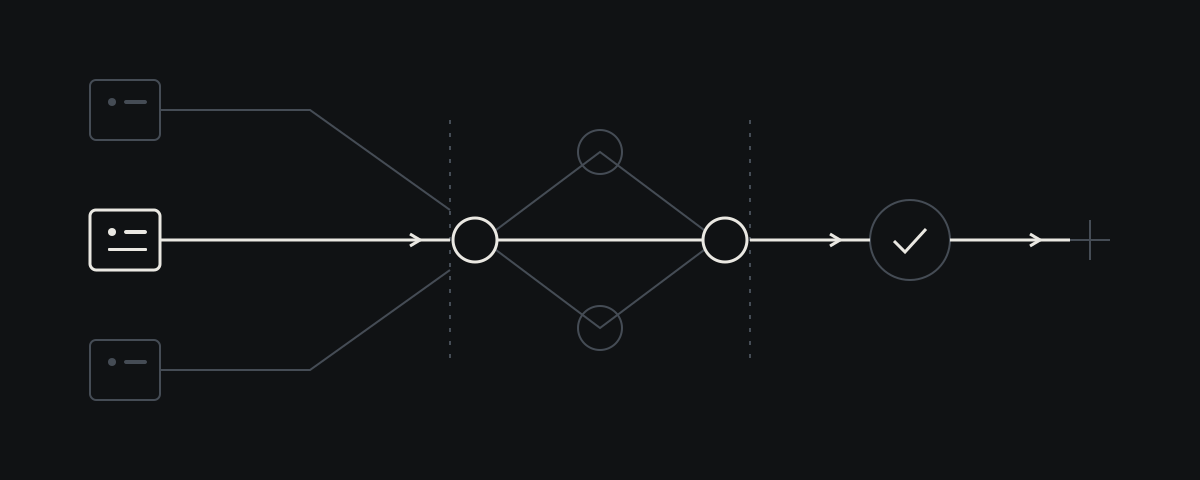
Schematic · not measured data The visible market, the recommendation and the transaction are different stages.
Sources in this version
- Shopping with ChatGPT Search ↗Live documentation consulted 23 October 2026 · How product results are selected; How merchants are selectedPublished 2026 · recorded in Atlas 23 October 2026
- Agentic Shopping is Complicated and Contingent ↗Laboratory technical-report page; consulted 23 October 2026 · How We Tested AI Shopping Agents; What We Manipulated; Order Changes the Outcome; Even Tool-Call Design MattersPublished 27 August 2026 · recorded in Atlas 23 October 2026
- What Is Your AI Agent Buying? Evaluation, Biases, Model Dependence, & Emerging Implications for Agentic E-Commerce ↗arXiv:2508.02630v3 · Sections 2, 5 and 7.2: simulator; choice behavior; headless interfacesPublished 17 December 2025 · recorded in Atlas 23 October 2026
- Source Preference in the Wild: How LLM Agents Favor Items by Source, and How to Reduce It ↗arXiv:2610.03195v1 · Sections 5 and 7; Appendix B: source identity, missing information and agent detailsPublished 2 October 2026 · recorded in Atlas 23 October 2026
- Personal Intelligence in AI Mode in Search: Help that’s uniquely yours ↗Launch announcement, 22 January 2026 · Get a more tailored Search, just for you; availability and user controlPublished 22 January 2026 · recorded in Atlas 23 October 2026
Revision 5 · Assessment changed · reviewed
Refines the opening, headings and prose for clarity and flow; preserves claims, sources, examples and limitations.
Answer in this version
Follow a realistic customer request through the sources, evidence, recommendation and seller choice. Invest where the decision breaks down, then check whether the outcome changes.
What remained unresolved
Repeated observations across relevant models, languages and customer requests, controlled changes, and actual downstream outcomes. Current research cannot supply a universal formula.
Takeaway and scope
An agent chooses from the market it can see, using the evidence and customer context available to it. Your advantage needs to remain visible through that process. Even then, being the recommended brand may not make you the chosen seller.
Documented product behaviour and bounded experiments, interpreted by Atlas. No universal ranking formula or guaranteed route to selection.
Product choice and merchant choice are separate
OpenAI describes shopping relevance as depending on user context, supplied metadata and other information. Its merchant rankings additionally consider availability, price, quality and maker or primary-seller status.
One vendor’s documented behaviour; no public universal ranking formula or guarantee of inclusion.
The information path can change the recommendation
Wharton’s controlled studies found that prior sources, their order, injected user context and tool-call presentation could change product choices, with different responses across models.
Watch-selection experiments reported by the lab. Neither customer purchases nor the effectiveness of a marketing programme was tested.
Models do not share one stable shopping preference
ACES reports model-dependent responses to price, ratings, position and labels; position effects also appear in text-only interfaces.
Controlled simulator findings. Sponsored-label effects at fixed exposure do not establish the total effect of advertising.
Source identity can influence choice beyond item fit
The Seoul preprint finds source preferences under matched conditions. Relabeling sources changes selection; supplying missing information can reduce reliance on source preconceptions.
Twelve models across shopping, accommodation and scholarly search. Agents received search-result snippets and URLs, without full-page browsing or purchasing. Not a brand ranking.
Personal context can enter recommendations
Google’s January 2026 announcement describes optional Gmail and Photos context informing AI Mode recommendations.
Vendor account of a limited launch; not evidence that every agent remembers every transaction or that a customer relationship guarantees selection.
Explanation in this version
You can lose before your offer is compared.
A shopping agent does not inspect the whole market. Its instructions, search queries and connected services shape the offers it can consider. A recommendation may draw on a snippet, a product feed or a review rather than your carefully designed product page. A missing detail is not automatically treated as false. It may prompt more searching, leave uncertainty or invite an assumption.
OpenAI’s shopping documentation names the inputs unusually clearly: user context, first- and third-party metadata, third-party content, and model responses generated before new search results. It also warns that not every available product is shown. This describes one implementation, but the strategic distinction is useful: getting considered and persuading the agent are separate problems.
Atlas conceptual model Four places where a good offer can disappear
Interpret the request
What does this customer need, and which constraints matter?
Where you can loseThe agent searches for a different problem from the one you solve.
Build the candidate set
Which products and sources become available through search or tools?
Where you can loseYour offer—or its decisive evidence—never reaches the comparison.
Make a recommendation
Which available offer appears to fit, on what evidence?
Where you can loseA competing source, prior association or customer preference outweighs your case.
Choose how to buy
Which seller can fulfil the request on acceptable terms?
Where you can loseYour brand wins, but another merchant gets the order—or no order is completed.
The order shows dependencies, not probabilities. Recommendation and purchase may happen in different systems or remain separate human decisions.
Similar products can answer different needs.
Price and headline specifications tell only part of the story. They leave out failure risk, compatibility, repair, delivery certainty and the cost of making the wrong choice. A customer delegates some of that judgement to an agent. For a company, the useful question is: in which customer situation can we demonstrate a difference that matters?
Illustrative example · no model run Same offers. Different reasons to choose.
Two portable work lights each cost USD 120 and advertise the same brightness and battery life.
Company A
An independent report confirms 10 hours of battery life at −10°C. Local repair availability is unknown.
Company B
A verified local service centre provides repairs. Cold-weather performance is undocumented.
“I work eight-hour shifts at −10°C. Battery performance matters most.”
A has the stronger documented case.
Its documented 10 hours covers the shift. That does not prove B performs worse; B’s relevant performance is unknown.
The products and evidence stay fixed; only the customer’s priority changes. These are authored comparisons, not predictions of a model’s choices.
Read all comparisons
Winter work
I work eight-hour shifts at −10°C. Battery performance matters most.
A has the stronger documented case. Its documented 10 hours covers the shift. That does not prove B performs worse; B’s relevant performance is unknown.
Local repair
I work indoors and need repairs nearby. Local service matters most.
B has the stronger documented case. Its verified service meets the priority. The cold-weather report adds little to this customer’s decision.
No priority given
Find me the better light for USD 120.
Ask what “better” means. The supplied facts do not justify one universal winner. Clarifying the task is more defensible than inventing a tie-breaker.
What do we mean by authority?
A test can support a product claim. A respected publisher can offer an informed judgement. A familiar name can serve as a shortcut when evidence is thin. Calling all three “trust” blurs a crucial distinction: evidence of quality and an association with quality are different things.
Jonghyun Song, Yohan Jo and colleagues at Seoul National University isolate part of this distinction. Their October 2026 preprint finds that changing a source label can change selection even when the item’s content stays the same. Filling information gaps reduces some source preference. The agents chose from search-result text; they did not browse full websites or complete transactions. The study reveals a mechanism, not a global brand ranking.
Three forms of authority · Atlas interpretation Evidence about the offer
- What it can contribute
- A reason to believe a specific claim under stated conditions.
- What a company can build
- Original tests, verifiable performance, named methods, dates and explicit limits.
Credibility of the source
- What it can contribute
- An informed external judgement—or a learned shortcut that can be wrong.
- What a company can build
- Earn relevant independent coverage; make claims inspectable. Repetition across copied pages is not independent corroboration.
Trust from this customer
- What it can contribute
- A known preference or prior experience, if available and relevant to the assistant.
- What a company can build
- Deliver consistently and give customers control of their preferences. Never assume access to their private history.
These are distinct mechanisms, not components of a disclosed ranking score. A source’s prestige does not validate every claim it carries.
How evidence reaches the agent can change the choice.
Ethan Mollick, Stefano Puntoni and their Wharton co-authors tested how prior context affected watch selection. The sources, their order and even whether tool calls were bundled or separate could change choices. The lab report describes about 26,000 controlled tests, not observed consumer purchases. The useful implication is specific: the same product page can lead to a different result depending on the information the agent encounters along the way.
Omar Besbes and Yash Kanoria’s ACES work, with academic and MyCustomAI co-authors, also finds that models respond differently to listing attributes and position. Position effects persist in text-only interfaces. Clean structured data can improve access without removing model bias.
For a company, the question extends beyond “Does our website explain us?” to “What information about us reaches the customer’s decision?” Inspect the actual source, date, excerpt and product variant. Weaknesses in the evidence that reaches the agent call for a different remedy from a genuinely weaker offer.
This gives a smaller specialist a plausible opening: build unusually strong evidence for a narrow need. An established company has a different task: back its familiar name with current, specific proof. Neither strategy guarantees selection. Fabricated reviews, copied endorsements and instructions hidden in pages serve neither strategy.
A customer relationship can become decision context.
In his January 2026 announcement, Google product leader Robby Stein describes optional Gmail and Photos connections for more personal AI Mode recommendations. The launch was a limited US, English-language experiment for eligible subscribers. It illustrates how prior preferences can enter a decision. It does not show that every agent continuously learns from every purchase.
Atlas’s strategic inference is that a brand may matter before the next search begins. If a customer explicitly prefers your fit, service or reliability, that preference can change the task their assistant receives. A good relationship may help define what counts as a suitable answer, as well as providing a direct-marketing channel.
Personal context brings a trade-off. It can make recommendations more useful, but it can also reinforce old choices and reduce discovery. Earn a preference through a distinctive experience; do not build a strategy around inserting claims into someone’s memory.
For a global company, language, country, delivery and local service are part of the decision. They need attention before translation. Test US and EU journeys separately, and include the platforms and languages people actually use in other priority markets. The Seoul study includes Chinese model families as well as Western ones; it does not measure consumers in those countries. No source here supports a worldwide adoption ranking.
Your product can win while another seller gets the order.
An agent might recommend your product and then choose a different retailer. OpenAI explicitly separates product selection from merchant ranking, where factors include availability, price, quality and maker or primary-seller status. It says organic product results are independent of partnerships and separate from ads. A feed or integration is not a purchased guarantee of recommendation.
This raises a commercial question: who captures the value? A manufacturer needs to know whether demand from agents reaches profitable channels. A retailer needs a reason to be the chosen seller once the product has been selected. A service business needs credible evidence that it can deliver, beyond a persuasive description of its category. This last application to services is Atlas’s inference from the mechanism.
Track each outcome separately: inclusion among the available offers, recommendation, seller selection, completed order and retained customer. You may be able to observe only some of them. A cited page shows exposure; it does not establish which revenue came from that exposure. Where a platform hides part of the journey, record the gap instead of turning a visibility score into a sales forecast.
Build a reason to choose you. Make sure it reaches the decision.
Start with a valuable customer decision. Write down why your company should win, what evidence would support that choice and what would make a competitor the better answer. If the reason amounts to “we are trusted and high quality”, the strategic work is unfinished. Let that work guide your choice of AI channels.
Then identify the problem: can the agent access your offer, does it have the evidence, or is the offer itself too weak? More content cannot fix an uncompetitive offer. Better evidence cannot help if it never reaches the decision. Invest in an integration when it connects a valuable customer journey to an advantage you can deliver.
A sequence of commercial decisions · Atlas recommendations Now · choose the customer situation
- Define a winning situation — Name the customer, task, market and reason your offer deserves preference.
- Locate the loss — Observe real search and recommendation paths. Record what was available, not just whether your name appeared.
Next · test the advantage
- Change one bottleneck — Improve relevant proof or its accessibility; keep the underlying comparison explicit.
- Repeat the comparison — Vary realistic requests, models, language and market. Preserve versions and failures; one favourable answer proves little.
Scale · follow the value
- Connect to outcomes — Check seller selection, completed work or orders, margin, returns and repeat use where observable.
- Expand when it pays — Extend distribution when customer demand and economics justify it. Recheck after important platform changes.
This is strategic guidance, not an Atlas-tested growth programme. The separate drafting guide tests a much narrower task.
Schematic · not measured data The visible market, the recommendation and the transaction are different stages.
Sources in this version
- Shopping with ChatGPT Search ↗Live documentation consulted 23 October 2026 · How product results are selected; How merchants are selectedPublished 2026 · recorded in Atlas 23 October 2026
- Agentic Shopping is Complicated and Contingent ↗Laboratory technical-report page; consulted 23 October 2026 · How We Tested AI Shopping Agents; What We Manipulated; Order Changes the Outcome; Even Tool-Call Design MattersPublished 27 August 2026 · recorded in Atlas 23 October 2026
- What Is Your AI Agent Buying? Evaluation, Biases, Model Dependence, & Emerging Implications for Agentic E-Commerce ↗arXiv:2508.02630v3 · Sections 2, 5 and 7.2: simulator; choice behavior; headless interfacesPublished 17 December 2025 · recorded in Atlas 23 October 2026
- Source Preference in the Wild: How LLM Agents Favor Items by Source, and How to Reduce It ↗arXiv:2610.03195v1 · Sections 5 and 7; Appendix B: source identity, missing information and agent detailsPublished 2 October 2026 · recorded in Atlas 23 October 2026
- Personal Intelligence in AI Mode in Search: Help that’s uniquely yours ↗Launch announcement, 22 January 2026 · Get a more tailored Search, just for you; availability and user controlPublished 22 January 2026 · recorded in Atlas 23 October 2026
Revision 4 · Assessment changed · reviewed
Explains how agents choose companies; moves the unchanged tested drafting pilot into its own guide.
Answer in this version
Trace a realistic customer request through the available sources, evidence, recommendation and seller choice. Invest in the weakest relevant link, then check whether the outcome changes.
What remained unresolved
Repeated observations across relevant models, languages and customer requests, controlled changes, and actual downstream outcomes. Current research cannot supply a universal formula.
Takeaway and scope
An agent chooses from the market it can see, using the evidence and customer context available to it. Your advantage must survive that translation—and being the recommended brand still may not make you the chosen seller.
Documented product behaviour and bounded experiments, interpreted by Atlas. No universal ranking formula or guaranteed route to selection.
Product choice and merchant choice are separate
OpenAI describes shopping relevance as depending on user context, supplied metadata and other information. Its merchant rankings additionally consider availability, price, quality and maker or primary-seller status.
One vendor’s documented behaviour; no public universal ranking formula or guarantee of inclusion.
The information path can change the recommendation
Wharton’s controlled studies found that prior sources, their order, injected user context and tool-call presentation could change product choices, with different responses across models.
Watch-selection experiments reported by the lab. Neither customer purchases nor the effectiveness of a marketing programme was tested.
Models do not share one stable shopping preference
ACES reports model-dependent responses to price, ratings, position and labels; position effects also appear in text-only interfaces.
Controlled simulator findings. Sponsored-label effects at fixed exposure do not establish the total effect of advertising.
Source identity can influence choice beyond item fit
The Seoul preprint finds source preferences under matched conditions. Relabeling sources changes selection; supplying missing information can reduce reliance on source preconceptions.
Twelve models across shopping, accommodation and scholarly search. Agents received search-result snippets and URLs, without full-page browsing or purchasing. Not a brand ranking.
Personal context can enter recommendations
Google’s January 2026 announcement describes optional Gmail and Photos context informing AI Mode recommendations.
Vendor account of a limited launch; not evidence that every agent remembers every transaction or that a customer relationship guarantees selection.
Explanation in this version
You can lose before your offer is compared.
A shopping agent does not inspect the whole market. Its instructions, search queries and connected services determine what becomes available for consideration. A recommendation may be built from a snippet, a product feed or a review rather than your carefully designed product page. An absent detail is not automatically treated as false; it may trigger more searching, uncertainty—or an assumption.
OpenAI’s shopping documentation makes the inputs unusually explicit: user context, first- and third-party metadata, third-party content, and model responses generated before new search results. It also warns that not every available product is shown. This is one implementation, but it exposes a useful strategic distinction: inclusion and persuasion are separate problems.
Atlas conceptual model Four places where a good offer can disappear
Interpret the request
What does this customer need, and which constraints matter?
Where you can loseThe agent searches for a different problem from the one you solve.
Build the candidate set
Which products and sources become available through search or tools?
Where you can loseYour offer—or its decisive evidence—never reaches the comparison.
Make a recommendation
Which available offer appears to fit, on what evidence?
Where you can loseA competing source, prior association or customer preference outweighs your case.
Choose how to buy
Which seller can fulfil the request on acceptable terms?
Where you can loseYour brand wins, but another merchant gets the order—or no order is completed.
Order expresses dependencies, not probabilities. Recommendation and purchase may happen in different systems or remain separate human decisions.
“Similar products” does not mean an equal decision.
Price and headline specifications compress an offer. They leave out failure risk, compatibility, repair, delivery certainty and the cost of making the wrong choice. A customer delegates some of that judgement to an agent. The strategically useful question becomes: for which customer situation can we demonstrate a difference that matters?
Illustrative example · no model run Same offers. Different reasons to choose.
Two portable work lights each cost USD 120 and advertise the same brightness and battery life.
Company A
An independent report confirms 10 hours of battery life at −10°C. Local repair availability is unknown.
Company B
A verified local service centre provides repairs. Cold-weather performance is undocumented.
“I work eight-hour shifts at −10°C. Battery performance matters most.”
A has the stronger documented case.
Its documented 10 hours covers the shift. That does not prove B performs worse; B’s relevant performance is unknown.
The products and evidence stay fixed; only the customer’s priority changes. These are authored comparisons, not predictions of a model’s choices.
Read all comparisons
Winter work
I work eight-hour shifts at −10°C. Battery performance matters most.
A has the stronger documented case. Its documented 10 hours covers the shift. That does not prove B performs worse; B’s relevant performance is unknown.
Local repair
I work indoors and need repairs nearby. Local service matters most.
B has the stronger documented case. Its verified service meets the priority. The cold-weather report adds little to this customer’s decision.
No priority given
Find me the better light for USD 120.
Ask what “better” means. The supplied facts do not justify one universal winner. Clarifying the task is more defensible than inventing a tie-breaker.
Authority is several signals with different meanings.
A test can support a product claim. A respected publisher can supply a useful judgement. A familiar name can also act as a shortcut when evidence is thin. Calling all three “trust” conceals the difference between information about quality and an association with quality.
Jonghyun Song, Yohan Jo and colleagues at Seoul National University isolate part of this distinction. Their October 2026 preprint finds that changing a source label can change selection while item content stays fixed. Filling information gaps reduces some source preference. The agents selected from search-result text, not full websites or completed transactions; this is evidence of a mechanism, not a global brand league table.
Three forms of authority · Atlas interpretation Evidence about the offer
- What it can contribute
- A reason to believe a specific claim under stated conditions.
- What a company can build
- Original tests, verifiable performance, named methods, dates and explicit limits.
Credibility of the source
- What it can contribute
- An informed external judgement—or a learned shortcut that can be wrong.
- What a company can build
- Earn relevant independent coverage; make claims inspectable. Repetition across copied pages is not independent corroboration.
Trust from this customer
- What it can contribute
- A known preference or prior experience, if available and relevant to the assistant.
- What a company can build
- Deliver consistently and give customers control of their preferences. Never assume access to their private history.
These are distinct mechanisms, not components of a disclosed ranking score. A source’s prestige does not validate every claim it carries.
The path to the evidence can alter its effect.
Ethan Mollick, Stefano Puntoni and their Wharton co-authors tested layers of prior context around watch selection. Sources, their ordering and even bundled versus separate tool calls could change choices. Their lab report describes about 26,000 controlled tests, not observed consumer purchases. The implication is narrower—and more useful—than “agents are irrational”: the same product page can produce a different result inside a different information journey.
Omar Besbes and Yash Kanoria’s ACES work, with academic and MyCustomAI co-authors, also finds model-specific responses to listing attributes and position. Text-only interfaces still show position effects. Clean structured data can improve access without removing model bias.
For a company, this shifts attention from “Does our website explain us?” to “What representation of us enters the customer’s decision?” Inspect the actual source, date, excerpt and product variant. A disadvantage in the evidence that reaches the agent needs a different remedy from a genuinely weaker offer.
A smaller specialist therefore has a plausible opening: become unusually well evidenced for a narrow need. An incumbent has a different task: turn familiarity into current, specific proof. Neither strategy guarantees selection, and neither is served by fabricated reviews, copied endorsements or instructions hidden in pages.
A customer relationship can become decision context.
Google product leader Robby Stein’s January 2026 announcement describes optional Gmail and Photos connections for more personal AI Mode recommendations. The launch was a limited US, English-language experiment for eligible subscribers. It illustrates how prior preferences can enter a decision; it does not prove that every agent continuously learns from every purchase.
Atlas’s strategic inference: a brand may matter before the next search begins. If the customer explicitly prefers your fit, service or reliability, that preference can change the task an assistant receives. A good relationship is thus more than a direct-marketing channel. It may help define what counts as a suitable answer.
There is a tension here. Personal context can make recommendations more useful, but can also reinforce old choices and reduce discovery. Earn a preference through a distinctive experience; do not build a strategy around inserting claims into someone’s memory.
For a global company, treat language, country, delivery and local service as parts of the decision—not a translation layer added afterwards. Test US and EU journeys separately, and include the actual platforms and languages used in other priority markets. The Seoul study includes Chinese model families as well as Western ones; it does not measure consumers in those countries. No source here supports a worldwide adoption ranking.
Winning the recommendation is not winning the relationship.
An agent might recommend your product and then choose a different retailer. OpenAI explicitly separates product selection from merchant ranking, where factors include availability, price, quality and maker or primary-seller status. It says organic product results are independent of partnerships and separate from ads. A feed or integration is not a purchased guarantee of recommendation.
The strategic consequence is about value capture. A manufacturer needs to know whether agent demand reaches profitable channels. A retailer needs a reason to be the chosen seller after the product is decided. A service business needs credible evidence of delivery capability, not just a persuasive category description. Applying this last point to services is Atlas’s inference from the mechanism.
Track the distinct outcomes: included in the available set, recommended, chosen as seller, completed order, retained customer. You may only be able to observe some of them. A cited page is evidence of exposure; it is not revenue attribution. Where a platform obscures the journey, record the gap instead of turning a visibility score into a sales forecast.
Invest in a reason to choose you—and its route to the customer.
Start with a valuable customer decision, not a list of AI channels. Write the specific reason your company should win, the evidence required to support it, and what would make a competitor the better answer. If the reason reduces to “we are trusted and high quality”, the strategic work is unfinished.
Then distinguish an access problem, an evidence problem and an offer problem. Publishing more content cannot fix an uncompetitive offer. Better evidence cannot help a decision if it never arrives. A new integration deserves investment when it connects a valuable customer journey to an advantage you can actually deliver.
A sequence of commercial decisions · Atlas recommendations Now · choose the contest
- Define a winning situation — Name the customer, task, market and reason your offer deserves preference.
- Locate the loss — Observe real search and recommendation paths. Record what was available, not just whether your name appeared.
Next · test the advantage
- Change one bottleneck — Improve relevant proof or its accessibility; keep the underlying comparison explicit.
- Repeat the comparison — Vary realistic requests, models, language and market. Preserve versions and failures; one favourable answer proves little.
Scale · follow the value
- Connect to outcomes — Check seller selection, completed work or orders, margin, returns and repeat use where observable.
- Earn the integration — Expand distribution when customer demand and economics justify it. Recheck after important platform changes.
This is strategic guidance, not an Atlas-tested growth programme. The separate drafting guide tests a much narrower task.
Schematic · not measured data The visible market, the recommendation and the transaction are different stages.
Sources in this version
- Shopping with ChatGPT Search ↗Live documentation consulted 23 October 2026 · How product results are selected; How merchants are selectedPublished 2026 · recorded in Atlas 23 October 2026
- Agentic Shopping is Complicated and Contingent ↗Laboratory technical-report page; consulted 23 October 2026 · How We Tested AI Shopping Agents; What We Manipulated; Order Changes the Outcome; Even Tool-Call Design MattersPublished 27 August 2026 · recorded in Atlas 23 October 2026
- What Is Your AI Agent Buying? Evaluation, Biases, Model Dependence, & Emerging Implications for Agentic E-Commerce ↗arXiv:2508.02630v3 · Sections 2, 5 and 7.2: simulator; choice behavior; headless interfacesPublished 17 December 2025 · recorded in Atlas 23 October 2026
- Source Preference in the Wild: How LLM Agents Favor Items by Source, and How to Reduce It ↗arXiv:2610.03195v1 · Sections 5 and 7; Appendix B: source identity, missing information and agent detailsPublished 2 October 2026 · recorded in Atlas 23 October 2026
- Personal Intelligence in AI Mode in Search: Help that’s uniquely yours ↗Launch announcement, 22 January 2026 · Get a more tailored Search, just for you; availability and user controlPublished 22 January 2026 · recorded in Atlas 23 October 2026
Revision 3 · Assessment changed · reviewed
Adds observed referral evidence and a sourced Klarna case, sharpens the operator perspective and shortens the strategy. The tested pilot is unchanged.
Answer in this version
Use customer outcomes, accepted work, total operating cost and recoverable failures to decide whether to continue, change course or stop.
What remained unresolved
Comparable work, representative customers and markets, repeated trials, permission and recovery tests, and observed commercial results.
Takeaway and scope
Prepare on two fronts: make your offer dependable when customers use agents, and improve one complete workflow inside the company. Invest further only when customer value, economics and control hold up.
Strategic guidance with a separately tested drafting pilot. One fictional case; no business return established.
Google asks for the search basics, not a special AI file
Google says its established search requirements also apply to AI Overviews and AI Mode. It recommends accessible text, structured data that matches the page and current business information. No special AI text file or schema is required.
Google-specific documentation. Meeting the requirements does not guarantee indexing or serving; it says nothing about every other agent or search provider. The downloadable .md here is an internal process brief.
AI already appears in surveyed shopping research
IBM and NRF report that 41% of surveyed consumers had used AI to research products, 33% to look for reviews and 31% for deals or promotions.
Self-reports from over 18,000 consumers across 23 countries in Q3 2025. Categories overlap. This is not a population-weighted global adoption rate or evidence of autonomous purchasing.
Visibility and delivered value are separate strategic problems
Dhar and coauthors emphasize alignment between a brand’s promise and performance. Kamath expects customers to build interfaces on broker APIs and says brokers that depend on prompting trades will resist.
These are perspectives from different businesses, not a direct debate or evidence that every company should adopt the same distribution model. Atlas draws the strategic distinction.
Measure a current, complete workflow
A published support study found a 15% average gain in issues resolved per hour with AI assistance. METR’s 2026 update explains why selection and parallel work complicate current developer-productivity measurement.
Different populations, tasks, tools and methods. The support estimate is from one firm; it cannot be applied to autonomous agents or used as a forecast of cost savings.
Work design includes both process change and human judgment
Brynjolfsson emphasizes complementary organizational investment; Mollick argues for preserving useful human participation as agents become more capable.
Expert interpretations with different emphases. The advice to measure review, rework and accepted outcomes is Atlas’s application, not a validated transformation recipe.
Connected capabilities change the failure modes
Willison identifies a prompt-injection risk when an agent combines private data, untrusted input and external communication. UCP describes negotiated commerce capabilities and handoffs.
These sources concern different layers: security and interoperability. Neither a prompt nor a protocol alone establishes authorization, reliability or commercial readiness.
A global strategy needs local operating evidence
ITU estimates Internet use at 94% in high-income countries and 23% in low-income countries in 2025. Nilekani emphasizes practical applications, local languages and voice access.
Connectivity estimates are not AI-adoption figures. Nilekani’s views are a perspective, not measured proof of language quality. Local journey testing is an editorial recommendation.
Referrals and purchases can be measured separately
Adobe reports higher purchase conversion among AI-referred U.S. retail visits in July 2026. Its earlier product-page assessment found gaps in machine readability.
Vendor telemetry and a proprietary diagnostic, not causal evidence, global coverage or an autonomous-purchase count. The two figures refer to different measures and reporting periods.
Workload estimates do not settle service design
Klarna’s launch release estimated work equivalent to 700 agents and already offered human help. Its 2025 annual report continued to describe both AI and human support.
Company statements, not an independent evaluation. The article’s recommendation to measure quality, escalation and cost together is Atlas’s interpretation.
Prepare to be chosen and to deliver
An agent uses a model and tools to work towards a goal. A customer’s agent may compare offers; your company’s agent may prepare answers or act in business systems. Connect the two: an easy-to-find offer still needs correct stock, delivery and service promises.
Choose the pressure point · editorial decision guide Retail & repeat purchases
- Start here
- Keep price, availability, delivery and returns consistent across channels.
- Judge the result
- Profitable completed orders, fewer broken promises and repeat purchases.
Expert services & B2B
- Start here
- Show who you serve, typical scope and credentials a buyer can check. Keep a person available for ambiguity.
- Judge the result
- Qualified opportunities and successful engagements, not answer-engine mentions.
Software & platforms
- Start here
- Choose actions customers could run from another app, such as checking status or reordering. Name who supports them.
- Judge the result
- Customers return, margins hold and you can support the customer relationship.
Select the row that matches the customer’s task, not just your industry label.
AI referrals can lead to purchases. Check your own journey.
Check whether an AI system can read your product facts. In April 2026, Adobe’s own checker scored U.S. retail product pages at 66% machine-readable content on average. That is a diagnostic from a vendor selling AI-visibility tools, not a universal test of every model.
Keep price, availability, terms and useful text accessible. For Google’s AI search features, existing search requirements still apply; no special AI file or schema is required. Eligibility does not guarantee inclusion.
Ask real customer questions, inspect the answers, then follow the path to an enquiry or purchase. Track accepted orders, repeat business and identifiable referrals. A mention is useful only if the next step works.
Two signals, different measures Vendor data · IBM / NRF Product research
41%
of surveyed consumers had used AI to research products.
23 countries · Q3 2025 · self-reported use.
Vendor data · Adobe Digital Insights Conversion after an AI referral
60% higher
purchase conversion than non-AI referrals to U.S. retail sites.
July 2026 · relative difference, not percentage points. Observational; visitors may already differ in purchase intent.
Different populations and periods. Neither measure establishes autonomous purchasing or a causal sales lift.
View data table & method
Product research
Figure 2, January 2026 report. Over 18,000 consumers surveyed across 23 countries in Q3 2025. Not a population-weighted global estimate or a measure of delegated purchases.
IBM / NRF Measure Value of surveyed consumers had used AI to research products. 41% Conversion after an AI referral
Adobe’s 19 August 2026 report, retail section. Conversion means visits that become purchases. A 60% relative difference equals 1.60 times the comparison rate, not a 60% conversion rate. The report does not give the absolute rates or AI’s share of total traffic. Its analysis covers over one trillion U.S. retail visits; the accompanying consumer survey is a separate source of evidence. Adobe sells analytics and AI-visibility products.
Adobe Digital Insights Measure Value purchase conversion than non-AI referrals to U.S. retail sites. 60% higher Own the agentic commerce experience ↗ Adobe report: U.S. retailers see surge in AI traffic, but many websites are not entirely readable by machines. ↗ Adobe report: U.S. consumers are embracing LLMs to make travel plans, but many brands have AI visibility gaps. ↗ AI features and your website ↗
Decide why the customer should still choose you
Invest in what makes you worth choosing: a product that fits, expertise, reliable delivery or service people value. Make it verifiable. Human preference and brand meaning still matter when an agent helps compare offers.
Own the authoritative facts, customer commitments and decision rights. Buy replaceable infrastructure when it serves the task. Before a platform deal, check fees, access to customer records, ranking incentives and the cost of leaving.
Our inference: reaching customers through someone else’s agent is valuable only if the underlying service remains worth choosing.
Two views of where value remains Ravi Dhar & coauthors
Yale consumer researcher, writing with Yale and BCG colleagues · consultancy context
Align the brand’s promise with actual delivery. Availability and service make marketing an operating responsibility.
Nithin Kamath
Zerodha co-founder · India · interview published by Zerodha
Expects customers to build their own interfaces on broker APIs. He says Zerodha embraces this; brokers that rely on prompting trades will resist.
Agentic AI Will Make the CMO’s Role More Consequential ↗ Welcome to The Back Office ↗
Fund a workflow, then measure an accepted outcome
Choose a recurring job with checkable results. Compare the current process, simpler automation and an agent. Include handoffs, exceptions, review and repair in cost per accepted result. Set quality and failure thresholds before testing; minutes saved do not automatically become cash.
A study of 5,172 support agents at one company found 15% more issues resolved per hour with AI assistance. It did not test autonomous service. METR’s 2026 developer-study update warns that selection and parallel work prevent a reliable current speedup estimate.
Klarna shows why workload and service quality need separate checks. In February 2024 it estimated that its assistant did the work of 700 full-time agents; customers could already choose human help. Its CEO acknowledged excessive cost-cutting in a May 2025 Bloomberg interview. Its 2025 annual report still described extensive AI use alongside human support. These are company claims, not an independent effect study. Our lesson: measure resolution quality and escalation alongside cost.
Let the process owner own the outcome, finance check the economics and staff shape the work. Preserve junior colleagues’ learning. More drafts are not progress if experienced reviewers become the bottleneck.
Redesign the work; retain useful judgment Erik Brynjolfsson
Stanford economist · Workhelix co-founder
Invest in processes, skills and products alongside AI. Judge value beyond headcount savings.
Ethan Mollick
Wharton researcher · writing about work with Lilach Mollick
Keep useful human participation: goals, judgment and discovery should shape the workflow.
Generative AI at Work ↗ We are Changing our Developer Productivity Experiment Design ↗ Is the AI productivity story at a turning point? ↗ Agency and Agents ↗ Klarna AI assistant handles two-thirds of customer service chats in its first month ↗ Klarna Slows AI-Driven Job Cuts With Call for Real People ↗ Klarna Group plc annual report for the year ended 31 December 2025 (Form 20-F) ↗
Increase authority only when you can contain failure
A draft can be the right permanent destination. Simon Willison warns about combining private data, untrusted content and external communication: a malicious instruction can become a route to disclosing information.
Enforce permissions in connected systems, not only in prompts. Name who can stop the workflow. Test conflicting instructions, outages, duplicate requests and recovery. Actions that cannot be reversed need stricter approval.
Shopify’s UCP explanation shows how commerce systems negotiate capabilities and handoffs. A protocol does not supply customer demand or permission to purchase. Integrate when a real journey warrants it.
Editorial decision guide Earn each permission before enabling it
Stop at any level. If checks fail, pause or return to narrower permissions. More autonomy is not the goal.
The lethal trifecta for AI agents: private data, untrusted content, and external communication ↗ Building the Universal Commerce Protocol ↗
Build for the markets you actually serve
Test the markets you serve: language, currency, tax display, delivery, payments and human handoff. A working U.S. journey does not establish readiness elsewhere.
Nandan Nilekani, Infosys co-founder and advocate of Indian digital public infrastructure, emphasizes useful applications, local languages and voice. His perspective puts access alongside capability. He also has a commercial technology affiliation.
Work with local staff and users. Keep a lightweight web or human route where an agent adds friction. ITU’s estimates show why one channel cannot serve everyone.
Why the world should stop obsessing over LLMs ↗ Global number of Internet users increases, but disparities deepen key digital divides ↗
Workflow in this version
Keep facts accurate
Choose one customer-facing offer. Record its current price and currency, availability, delivery, terms and evidence, including country or language differences. Name the authoritative source and owner. Compare an older page or channel against it; flag conflicts instead of silently averaging them.
People and agents can repeat the same wrong fact. An owner must resolve a conflict before it becomes a promise.
Bound one job
Pick a small task such as drafting a product-enquiry reply. Record approved inputs, result, owner, permitted actions, checks and stop conditions. The downloadable template keeps these together. Start with reading and drafting only. Configure tool permissions separately; a Markdown file cannot enforce them.
A narrow scope lets you see both useful work and the points where control should return to a person.
Run and inspect
Ask for a facts/conflicts/gaps table first. Open each important source location and resolve conflicts with the owner. Then request the draft from checked facts. Check every consequential number, promise and omission; stop any unsupported external action.
A polished reply can conceal a wrong price, unavailable stock or an invented delivery promise.
Use only the supplied material and its stated source precedence. First return a fact table with file/section references, conflicts and missing information. Do not infer absent facts. Do not draft the customer reply until I have checked the table. Do not send, publish, order, reserve stock or change records. After my source check: draft a reply from the checked facts. Keep unresolved questions explicit and label the output for staff review.
Decide before expanding
Record errors, corrections, retries and unresolved facts. Choose draft-ready, revise or stop. Record actual completion time, review/rework time and cost if measured; otherwise write unknown. Before claiming improvement, compare equivalent work with today’s process. Widen permissions only after representative runs and failure/recovery checks justify it.
One successful draft supports that example. It does not establish business value or permission to act for customers.
Choose, test, then decide Now · choose
- Map one journey — commercial lead: find where customers compare, hesitate and leave.
- Select one workflow — process owner: name the baseline and acceptance checks.
- Set the boundary — system owner: use approved data and draft-only access.
Next 30–90 days · prove
- Compare real work — owner and finance: count accepted results, total cost and failure severity.
- Test locally — customer team: include language, exceptions and a working handoff.
- Decide — sponsor: continue, redesign or stop; keep draft-only if that works best.
Later · expand selectively
- Connect when needed — product lead: integrate one supported service when demonstrated demand justifies the cost.
- Earn each permission — system owner: verify controls and recovery before enabling actions.
- Check platform costs — leadership: fees, customer-data access and what leaving would take.
Timing organizes a review. Demand, representative results and operational controls decide whether expansion happens.
Process template in this version
# Agent workflow brief

Internal operating instructions, not an AI-search optimization file.
This document does not grant or enforce tool permissions.

## Goal and owner
- Task and acceptable result:
- Responsible owner and reviewer:
- Date / next review:

## Approved facts
- File or URL, version/date, responsible owner:
- Required currency, unit, country/language and conditions:
- Precedence when sources disagree:
- Missing facts to resolve with the owner:

## Boundaries
- Allowed: read the supplied materials and draft for review.
- Not allowed: send, publish, purchase, reserve stock, change records or access other data.
- Configure connected tools to enforce these limits. A prompt is not an access control.
- Budget / time limit / retry limit:

## Run
1. Extract relevant facts with exact file/section locations.
2. List conflicts and missing information. Do not infer absent facts.
3. Reviewer checks the table against original material.
4. Draft only from checked facts. Keep unresolved points explicit.
5. Reviewer checks every consequential claim before any external use.

## Acceptance checks — fill in before running
- Required facts and questions:
- Numbers, currencies, dates, locations and conditions:
- Unsupported promises that must not appear:
- Who resolves missing facts:

## Stop and escalate
- A central fact is missing, conflicting or outdated.
- An action exceeds the allowed scope or budget.
- A check fails; stop that action and return the issue to the owner.
- No external action without the separately authorized person and system controls.

## Record the outcome
- Actual tool/model label and date:
- Input versions and saved output:
- Errors, corrections, retries and unresolved facts:
- Acceptable draft / revise / stop, and reviewer:
- Measured completion time, review/rework time and cost, or unknown:
- Next decision and date:

Before claiming improvement, compare equivalent work with the current process.
A successful example is not permission to expand autonomy.
Result checks
- Important facts match the authoritative material, including units, currency, dates, geography and exceptions.
- Each customer request is answered or explicitly left unresolved with an owner.
- Conflicts and missing facts stay visible; the draft adds no unsupported promise.
- No action exceeded the configured scope. The reviewer recorded a decision and any rework.
Test record
Last tested 23 October 2026 · Separate Codex agent; Atlas editor agent checked the source table and final draft · Exact model version not exposed.. One complete fictional run met the predefined checks. The audit caught five conflicting old-page statements. The draft preserved USD 59, the 12-unit limit, Canada’s delivery estimate, the warranty scope, unknown charges and staff-only order placement. The editor checked the audit before requesting the draft, then checked every central conclusion. No corrective prompt or retry was needed. This was one short, synthetic text case in an agent environment with prior editorial context. The answer checklist was not supplied to the test agent; no fresh-context isolation is claimed. It tested drafting and review by AI agents, not human usability, tool-permission enforcement, a live website, multilingual work, actual sending/ordering, visibility or business impact. No comparison, time saving or cost was measured.
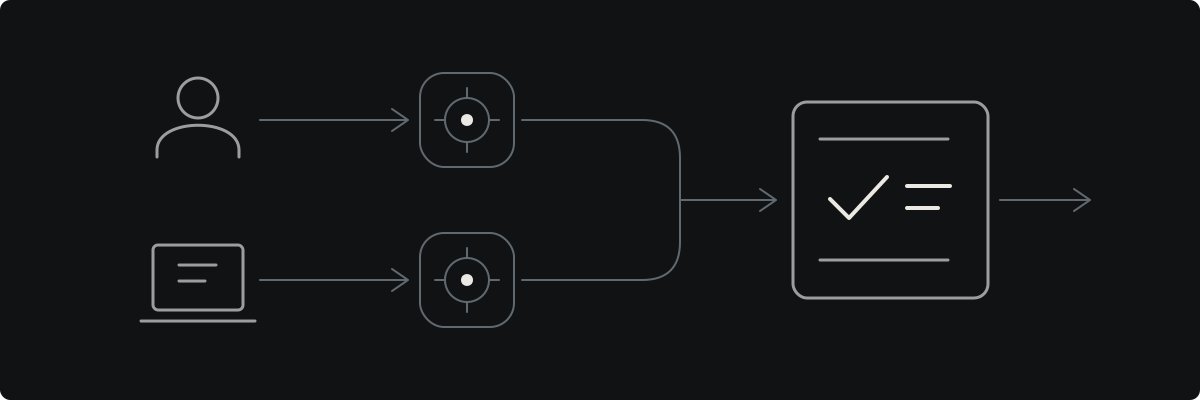
Illustration Two fronts, one promise. Customers’ agents help them choose; company agents help teams deliver. The offer must hold up on both sides.
Sources in this version
- AI features and your website ↗Page last updated 10 December 2025; consulted 23 October 2026 · How to appear in AI features; SEO best practices; Measuring the performance of your sitePublished 10 December 2025 · recorded in Atlas 23 October 2026
- Own the agentic commerce experience ↗Published source; consulted 23 October 2026 · Figure 2, printed p. 15 (PDF p. 15); methodology, printed p. 31; consumer sample, p. 32Published January 2026 · recorded in Atlas 23 October 2026
- Agentic AI Will Make the CMO’s Role More Consequential ↗Published source; consulted 23 October 2026 · Brand Stewardship: From Narrative to Promise–Performance AlignmentPublished 16 July 2026 · recorded in Atlas 23 October 2026
- Welcome to The Back Office ↗Interview consulted on 23 October 2026 · Interview section on AI, apps and broker APIsPublished 22 July 2026 · recorded in Atlas 23 October 2026
- Generative AI at Work ↗Published source; consulted 23 October 2026 · Abstract; Introduction; Section II, setting and deploymentPublished 4 February 2025 · recorded in Atlas 23 October 2026
- We are Changing our Developer Productivity Experiment Design ↗Published source; consulted 23 October 2026 · Summary; selection effects; task selection and parallel agent workPublished 24 February 2026 · recorded in Atlas 23 October 2026
- Is the AI productivity story at a turning point? ↗Published source; consulted 23 October 2026 · Interview: complementary investments, task bundles, and measuring ROIPublished 31 July 2026 · recorded in Atlas 23 October 2026
- Agency and Agents ↗Published source; consulted 23 October 2026 · The Twilight FactoryPublished 31 August 2026 · recorded in Atlas 23 October 2026
- The lethal trifecta for AI agents: private data, untrusted content, and external communication ↗Published source; consulted 23 October 2026 · The three capabilities and indirect prompt-injection riskPublished 16 June 2025 · recorded in Atlas 23 October 2026
- Building the Universal Commerce Protocol ↗Published source; consulted 23 October 2026 · Capability negotiation; capabilities, extensions and buyer handoffPublished 11 January 2026 · recorded in Atlas 23 October 2026
- Global number of Internet users increases, but disparities deepen key digital divides ↗Published source; consulted 23 October 2026 · Persistent divides; Facts and Figures 2025 headline estimatesPublished 17 November 2025 · recorded in Atlas 23 October 2026
- Why the world should stop obsessing over LLMs ↗Interview consulted on 23 October 2026 · Interview sections on local languages, voice and practical AI applicationsPublished 21 July 2025 · recorded in Atlas 23 October 2026
- Adobe report: U.S. consumers are embracing LLMs to make travel plans, but many brands have AI visibility gaps. ↗19 August 2026 report; retail subsection, July 2026 observations · In retail, AI continues to reshape the online shopping experiencePublished 19 August 2026 · recorded in Atlas 23 October 2026
- Adobe report: U.S. retailers see surge in AI traffic, but many websites are not entirely readable by machines. ↗16 April 2026 report; consulted 23 October 2026 · Many U.S. retail sites have not been revamped for AI visibilityPublished 16 April 2026 · recorded in Atlas 23 October 2026
- Klarna AI assistant handles two-thirds of customer service chats in its first month ↗Company-issued release, first month after launch · Opening results bullets and paragraph before executive commentsPublished 27 February 2024 · recorded in Atlas 23 October 2026
- Klarna Slows AI-Driven Job Cuts With Call for Real People ↗Accessible introduction only; full article is subscriber-only · Publicly accessible introductory paragraphPublished 8 May 2025 · recorded in Atlas 23 October 2026
- Klarna Group plc annual report for the year ended 31 December 2025 (Form 20-F) ↗2025 annual report; printed p. 184 / PDF p. 188 · Operating leverage from AI; printed p. 184 / PDF p. 188Published 2026 · recorded in Atlas 23 October 2026
Revision 2 · Assessment changed · reviewed
Adds strategic choices for customer access, differentiated value, workflow economics and delegated authority. The original four-step pilot and its test remain unchanged.
Answer in this version
Use customer outcomes, accepted work, total operating cost and recoverable failures to decide whether to continue, change course or stop.
What remained unresolved
Comparable work, representative customers and markets, repeated trials, permission and recovery tests, and observed commercial results.
Takeaway and scope
Prepare on two fronts: make your offer dependable when customers use agents, and improve one complete workflow inside the company. Invest further only when customer value, economics and control hold up.
Strategic guidance with a separately tested drafting pilot. One fictional case; no business return established.
Google asks for the search basics, not a special AI file
Google says its established search requirements also apply to AI Overviews and AI Mode. It recommends accessible text, structured data that matches the page and current business information. No special AI text file or schema is required.
Google-specific documentation. Meeting the requirements does not guarantee indexing or serving; it says nothing about every other agent or search provider. The downloadable .md here is an internal process brief.
AI already appears in surveyed shopping research
IBM and NRF report that 41% of surveyed consumers had used AI to research products, 33% to look for reviews and 31% for deals or promotions.
Self-reports from over 18,000 consumers across 23 countries in Q3 2025. Categories overlap. This is not a population-weighted global adoption rate or evidence of autonomous purchasing.
Visibility and delivered value are separate strategic problems
Dhar and coauthors argue that AI-mediated comparison makes alignment between a brand’s promise and its actual performance more consequential. Kamath describes welcoming alternative interfaces to Zerodha’s services.
These are perspectives from different businesses, not a direct debate or evidence that every company should adopt the same distribution model. Atlas draws the strategic distinction.
Measure a current, complete workflow
A published support study found a 15% average gain in issues resolved per hour with AI assistance. METR’s 2026 update explains why selection and parallel work complicate current developer-productivity measurement.
Different populations, tasks, tools and methods. The support estimate is from one firm; it cannot be applied to autonomous agents or used as a forecast of cost savings.
Work design includes both process change and human judgment
Brynjolfsson emphasizes complementary organizational investment; Mollick argues for preserving useful human participation as agents become more capable.
Expert interpretations with different emphases. The advice to measure review, rework and accepted outcomes is Atlas’s application, not a validated transformation recipe.
Connected capabilities change the failure modes
Willison identifies a prompt-injection risk when an agent combines private data, untrusted input and external communication. UCP describes negotiated commerce capabilities and handoffs.
These sources concern different layers: security and interoperability. Neither a prompt nor a protocol alone establishes authorization, reliability or commercial readiness.
A global strategy needs local operating evidence
ITU estimates Internet use at 94% in high-income countries and 23% in low-income countries in 2025. Nilekani emphasizes practical applications, local languages and voice access.
Connectivity estimates are not AI-adoption figures. Nilekani’s views are a perspective, not measured proof of language quality. Local journey testing is an editorial recommendation.
Prepare to be chosen—and to deliver
An agent is software that uses a model and tools to pursue a goal across several steps. For a company, two changes matter. A customer’s agent may research, compare or arrange a purchase. Your own agent may assemble an answer, coordinate work or act in a business system. The first changes access to demand; the second changes how you fulfil it.
Treat them as connected decisions. A perfectly discoverable offer is a liability if stock or delivery promises are wrong. A cheaper internal process is a poor investment if it makes the customer’s problem harder to resolve. Start with a valuable customer outcome, then choose the smallest useful change.
Choose the pressure point · editorial decision guide Retail & repeat purchases
- Start here
- Keep price, availability, delivery and returns consistent across channels.
- Judge the result
- Profitable completed orders, fewer broken promises and repeat purchases.
Expert services & B2B
- Start here
- Make expertise, fit and evidence inspectable. Keep a person available for ambiguity.
- Judge the result
- Qualified opportunities and successful engagements, not answer-engine mentions.
Software & platforms
- Start here
- Identify services worth accessing through other interfaces; define permissions and support.
- Judge the result
- Useful, retained usage with viable margins and an accountable customer relationship.
These are starting hypotheses. Select the row that matches the customer job, not just your industry label.
Research is moving. Purchases are a separate question.
In IBM and NRF’s 23-country survey, AI use already reached parts of shopping research. That makes accurate answers worth preparing for. It does not tell you how much revenue an agent will control—or whether a recommendation becomes a purchase.
For Google’s AI search features, the starting work is familiar: accessible useful content, current business information and structured data that matches the visible page. Google requires no special AI file or schema. Indexing and eligibility still do not guarantee inclusion.
Build a small set of real customer questions, including alternatives, objections and local terms. Inspect whether answers represent your offer correctly and whether people can complete the next step. Track qualified enquiries, purchases and repeat business alongside identifiable referrals. Separate unknown attribution; a rise in mentions is not a return on investment.
Own the agentic commerce experience ↗ AI features and your website ↗
Decide why the customer should still choose you
If an agent can compare interchangeable offers, another layer of promotional copy is unlikely to be a durable advantage. Invest in something customers value: a product that fits, distinctive expertise, dependable fulfilment, useful service or a relationship they want to keep. Make that value easy to verify. Human preference and brand meaning still belong in the strategy; an agent need not make the entire decision.
The ownership question is sharper than “build or buy AI.” Own the authoritative facts, customer commitments, decision rights and evidence of quality. Buy replaceable infrastructure where it serves the job. Before signing a platform deal, assess fees, access to customer records, ranking incentives and the cost of leaving. Keep a direct route where it is commercially sensible.
These two positions illuminate different choices; they are not a recorded debate. Our inference: reach through someone else’s agent can be valuable, but only if what remains underneath is worth choosing.
Two views of where value remains Ravi Dhar & coauthors
Yale consumer researcher, writing with Yale and BCG colleagues · consultancy context
Align the brand’s promise with actual delivery. Their argument moves marketing closer to operations, where availability and service determine whether the promise holds.
Nithin Kamath
Zerodha co-founder · India · operator with a brokerage interest
Welcomes the possibility of customers reaching his brokerage through other apps and APIs. His position reflects Zerodha’s business model, not a rule for every platform.
Agentic AI Will Make the CMO’s Role More Consequential ↗ Welcome to The Back Office ↗
Fund a workflow, then measure an accepted outcome
Choose a recurring job with usable inputs, a checkable result and a manageable cost of failure. Compare an agent with the present process and simpler automation. Deterministic rules may be cheaper and easier to maintain; some tasks do not need changing. Sketch the whole journey, including handoffs, exceptions and the person who fixes mistakes.
There is evidence of useful assistance, but no universal productivity number. A published study of 5,172 support agents at one company found 15% more issues resolved per hour on average, with uneven effects across workers. It studied assistance to staff, not autonomous service. METR’s 2026 developer-study update warns that selection effects and parallel agent work prevent a reliable current speedup estimate.
Define acceptance before testing: factual accuracy, completion, customer impact and failures that must never pass unnoticed. Compare similar cases, count failed runs and record review and repair time. Include model use, integration, supervision and maintenance in cost per accepted result. Value extra capacity only when it improves service or produces useful output; minutes saved do not automatically become cash.
Give the process owner responsibility for the outcome, with finance checking the economics and staff shaping the work. Preserve learning opportunities for junior colleagues. A system that produces more drafts but makes experienced people the new bottleneck has not yet improved the workflow.
Redesign the work; retain useful judgment Erik Brynjolfsson
Stanford economist · Workhelix co-founder
Emphasizes complementary investment in processes, skills and products. His argument asks leaders to look beyond headcount savings when judging value.
Ethan Mollick
Wharton researcher · writing about work with Lilach Mollick
Argues that removing people is often the wrong design objective. Build points where human goals, judgment and discovery improve the work.
Generative AI at Work ↗ We are Changing our Developer Productivity Experiment Design ↗ Is the AI productivity story at a turning point? ↗ Agency and Agents ↗
Increase authority only when you can contain failure
A useful draft can be the right permanent destination. Each added permission changes what failure can cost. Software developer Simon Willison highlights a particularly dangerous combination: private data, untrusted content and external communication. A malicious instruction in a document can become more consequential when the same system can disclose information.
Enforce scope in connected systems, not only in a prompt. Name the person who can stop the workflow. Test unavailable services, conflicting instructions, duplicate requests and recovery before giving it consequential actions. Some effects cannot be fully reversed; those require a stricter gate.
Commerce standards can help systems negotiate supported capabilities. Shopify’s UCP explanation shows that mechanism, including handoffs. A protocol alone does not create demand, impartial recommendations or permission to purchase. Integrate when a real customer or partner journey warrants it and verify that journey in the intended market.
Permission is a business decision · editorial gates Read & draft
- Allowed work
- Use approved inputs; prepare a result for review.
- Evidence before moving further
- Representative results meet checks; review effort is understood.
Prepare an action
- Allowed work
- Fill an order or propose a change without committing it.
- Evidence before moving further
- Identity, authority, missing-data handling and approval handoff work.
Execute within limits
- Allowed work
- Act only inside explicit scope, transaction and budget limits.
- Evidence before moving further
- Logs, duplicate protection, exception routing and recovery have been tested.
The owner may stop at any level. This is a decision framework, not a tested security implementation or a certification.
The lethal trifecta for AI agents: private data, untrusted content, and external communication ↗ Building the Universal Commerce Protocol ↗
Build for the markets you actually serve
A launch in the United States is not evidence of readiness in Europe, India or elsewhere. Verify local service availability, customer expectations and applicable requirements before promising a journey. Test actual language, currency, tax presentation, delivery, payments and escalation—not only a translated prompt.
Nandan Nilekani, Infosys co-founder and an advocate of Indian digital public infrastructure, emphasizes useful applications, local languages and voice. His perspective broadens the question from model capability to access; he also has a commercial technology affiliation. ITU’s connectivity estimates show why a global strategy needs more than one route.
Prioritize the markets where you already have customers or a credible offer. Run the same outcome checks with local staff and users; preserve a lightweight web or human route where an agent adds friction. Scale a demonstrated journey, not the assumption that everyone will use the same assistant.
Why the world should stop obsessing over LLMs ↗ Global number of Internet users increases, but disparities deepen key digital divides ↗
Workflow in this version
Keep facts accurate
Choose one customer-facing offer. Record its current price and currency, availability, delivery, terms and evidence, including country or language differences. Name the authoritative source and owner. Compare an older page or channel against it; flag conflicts instead of silently averaging them.
People and agents can repeat the same wrong fact. An owner must resolve a conflict before it becomes a promise.
Bound one job
Pick a small task such as drafting a product-enquiry reply. Record approved inputs, result, owner, permitted actions, checks and stop conditions. The downloadable template keeps these together. Start with reading and drafting only. Configure tool permissions separately; a Markdown file cannot enforce them.
A narrow scope lets you see both useful work and the points where control should return to a person.
Run and inspect
Ask for a facts/conflicts/gaps table first. Open each important source location and resolve conflicts with the owner. Then request the draft from checked facts. Check every consequential number, promise and omission; stop any unsupported external action.
A polished reply can conceal a wrong price, unavailable stock or an invented delivery promise.
Use only the supplied material and its stated source precedence. First return a fact table with file/section references, conflicts and missing information. Do not infer absent facts. Do not draft the customer reply until I have checked the table. Do not send, publish, order, reserve stock or change records. After my source check: draft a reply from the checked facts. Keep unresolved questions explicit and label the output for staff review.
Decide before expanding
Record errors, corrections, retries and unresolved facts. Choose draft-ready, revise or stop. Record actual completion time, review/rework time and cost if measured; otherwise write unknown. Before claiming improvement, compare equivalent work with today’s process. Widen permissions only after representative runs and failure/recovery checks justify it.
One successful draft supports that example. It does not establish business value or permission to act for customers.
Make the next decision earn its place · illustrative planning horizon Now · choose
- Map one journey — commercial lead: identify where customers compare, hesitate and leave.
- Select one workflow — process owner: name the problem, baseline and acceptance checks.
- Set the boundary — system owner: start with approved data and draft-only access.
Next 30–90 days · prove
- Compare real work — process owner and finance: measure accepted results, total cost and failure severity.
- Test local journeys — customer team: include exceptions, language and a working handoff.
- Choose an outcome — sponsor: continue, redesign or stop. Keep a draft-only system if that is where value holds.
Later · expand selectively
- Connect on demand — product lead: integrate a supported service when actual usage justifies the cost.
- Earn each permission — system owner: demonstrate controls and recovery before expanding actions.
- Review dependence — leadership: revisit margins, customer access and switching costs as platforms change.
Atlas editorial guidance, not a tested rollout schedule. The dates organize a review; demand, representative results and operational controls decide whether expansion happens.
Process template in this version
# Agent workflow brief

Internal operating instructions, not an AI-search optimization file.
This document does not grant or enforce tool permissions.

## Goal and owner
- Task and acceptable result:
- Responsible owner and reviewer:
- Date / next review:

## Approved facts
- File or URL, version/date, responsible owner:
- Required currency, unit, country/language and conditions:
- Precedence when sources disagree:
- Missing facts to resolve with the owner:

## Boundaries
- Allowed: read the supplied materials and draft for review.
- Not allowed: send, publish, purchase, reserve stock, change records or access other data.
- Configure connected tools to enforce these limits. A prompt is not an access control.
- Budget / time limit / retry limit:

## Run
1. Extract relevant facts with exact file/section locations.
2. List conflicts and missing information. Do not infer absent facts.
3. Reviewer checks the table against original material.
4. Draft only from checked facts. Keep unresolved points explicit.
5. Reviewer checks every consequential claim before any external use.

## Acceptance checks — fill in before running
- Required facts and questions:
- Numbers, currencies, dates, locations and conditions:
- Unsupported promises that must not appear:
- Who resolves missing facts:

## Stop and escalate
- A central fact is missing, conflicting or outdated.
- An action exceeds the allowed scope or budget.
- A check fails; stop that action and return the issue to the owner.
- No external action without the separately authorized person and system controls.

## Record the outcome
- Actual tool/model label and date:
- Input versions and saved output:
- Errors, corrections, retries and unresolved facts:
- Acceptable draft / revise / stop, and reviewer:
- Measured completion time, review/rework time and cost, or unknown:
- Next decision and date:

Before claiming improvement, compare equivalent work with the current process.
A successful example is not permission to expand autonomy.
Result checks
- Important facts match the authoritative material, including units, currency, dates, geography and exceptions.
- Each customer request is answered or explicitly left unresolved with an owner.
- Conflicts and missing facts stay visible; the draft adds no unsupported promise.
- No action exceeded the configured scope. The reviewer recorded a decision and any rework.
Test record
Last tested 23 October 2026 · Separate Codex agent; Atlas editor agent checked the source table and final draft · Exact model version not exposed.. One complete fictional run met the predefined checks. The audit caught five conflicting old-page statements. The draft preserved USD 59, the 12-unit limit, Canada’s delivery estimate, the warranty scope, unknown charges and staff-only order placement. The editor checked the audit before requesting the draft, then checked every central conclusion. No corrective prompt or retry was needed. This was one short, synthetic text case in an agent environment with prior editorial context. The answer checklist was not supplied to the test agent; no fresh-context isolation is claimed. It tested drafting and review by AI agents, not human usability, tool-permission enforcement, a live website, multilingual work, actual sending/ordering, visibility or business impact. No comparison, time saving or cost was measured.
Illustration Two fronts, one promise. Customers’ agents help them choose; company agents help teams deliver. The offer must hold up on both sides.
Sources in this version
- AI features and your website ↗Page last updated 10 December 2025; consulted 23 October 2026 · How to appear in AI features; SEO best practices; Measuring the performance of your sitePublished 10 December 2025 · recorded in Atlas 23 October 2026
- Own the agentic commerce experience ↗Published source; consulted 23 October 2026 · Figure 2, printed p. 15 (PDF p. 15); methodology, printed p. 31; consumer sample, p. 32Published January 2026 · recorded in Atlas 23 October 2026
- Agentic AI Will Make the CMO’s Role More Consequential ↗Published source; consulted 23 October 2026 · Brand Stewardship: From Narrative to Promise–Performance AlignmentPublished 16 July 2026 · recorded in Atlas 23 October 2026
- Welcome to The Back Office ↗Interview consulted on 23 October 2026 · Interview section on AI, apps and broker APIsPublished 22 July 2026 · recorded in Atlas 23 October 2026
- Generative AI at Work ↗Published source; consulted 23 October 2026 · Abstract; Introduction; Section II, setting and deploymentPublished 4 February 2025 · recorded in Atlas 23 October 2026
- We are Changing our Developer Productivity Experiment Design ↗Published source; consulted 23 October 2026 · Summary; selection effects; task selection and parallel agent workPublished 24 February 2026 · recorded in Atlas 23 October 2026
- Is the AI productivity story at a turning point? ↗Published source; consulted 23 October 2026 · Interview: complementary investments, task bundles, and measuring ROIPublished 31 July 2026 · recorded in Atlas 23 October 2026
- Agency and Agents ↗Published source; consulted 23 October 2026 · The Twilight FactoryPublished 31 August 2026 · recorded in Atlas 23 October 2026
- The lethal trifecta for AI agents: private data, untrusted content, and external communication ↗Published source; consulted 23 October 2026 · The three capabilities and indirect prompt-injection riskPublished 16 June 2025 · recorded in Atlas 23 October 2026
- Building the Universal Commerce Protocol ↗Published source; consulted 23 October 2026 · Capability negotiation; capabilities, extensions and buyer handoffPublished 11 January 2026 · recorded in Atlas 23 October 2026
- Global number of Internet users increases, but disparities deepen key digital divides ↗Published source; consulted 23 October 2026 · Persistent divides; Facts and Figures 2025 headline estimatesPublished 17 November 2025 · recorded in Atlas 23 October 2026
- Why the world should stop obsessing over LLMs ↗Interview consulted on 23 October 2026 · Interview sections on local languages, voice and practical AI applicationsPublished 21 July 2025 · recorded in Atlas 23 October 2026
Revision 1 · First recorded version · reviewed
Separates practical company preparation from the agent-futures Explainer. Adds a bounded facts-to-draft routine, a process template and conditional next steps.
Answer in this version
Compare acceptable outcomes, errors, review effort and cost on representative work before widening the scope. This Playbook does not establish a general return on investment.
What remained unresolved
Repeated work, failure and recovery cases, permission controls, customer outcomes and comparison with the existing process.
Takeaway and scope
Keep customer facts accurate, give one workflow clear limits, and inspect the result before expanding delegation.
Tried on one fictional facts-to-draft case. Future integrations, search visibility and commercial outcomes were not tested.
Google asks for the search basics, not a special AI file
Google says its established search requirements also apply to AI Overviews and AI Mode. It recommends accessible text, structured data that matches the page and current business information. No special AI text file or schema is required.
Google-specific documentation. Meeting the requirements does not guarantee indexing or serving; it says nothing about every other agent or search provider. The downloadable .md here is an internal process brief.
Workflow in this version
Keep facts accurate
Choose one customer-facing offer. Record its current price and currency, availability, delivery, terms and evidence, including country or language differences. Name the authoritative source and owner. Compare an older page or channel against it; flag conflicts instead of silently averaging them.
People and agents can repeat the same wrong fact. An owner must resolve a conflict before it becomes a promise.
Bound one job
Pick a small task such as drafting a product-enquiry reply. Record approved inputs, result, owner, permitted actions, checks and stop conditions. The downloadable template keeps these together. Start with reading and drafting only. Configure tool permissions separately; a Markdown file cannot enforce them.
A narrow scope lets you see both useful work and the points where control should return to a person.
Run and inspect
Ask for a facts/conflicts/gaps table first. Open each important source location and resolve conflicts with the owner. Then request the draft from checked facts. Check every consequential number, promise and omission; stop any unsupported external action.
A polished reply can conceal a wrong price, unavailable stock or an invented delivery promise.
Use only the supplied material and its stated source precedence. First return a fact table with file/section references, conflicts and missing information. Do not infer absent facts. Do not draft the customer reply until I have checked the table. Do not send, publish, order, reserve stock or change records. After my source check: draft a reply from the checked facts. Keep unresolved questions explicit and label the output for staff review.
Decide before expanding
Record errors, corrections, retries and unresolved facts. Choose draft-ready, revise or stop. Record actual completion time, review/rework time and cost if measured; otherwise write unknown. Before claiming improvement, compare equivalent work with today’s process. Widen permissions only after representative runs and failure/recovery checks justify it.
One successful draft supports that example. It does not establish business value or permission to act for customers.
A decision sequence · starting October 2026 Now
- Keep facts accurate — align your offer across customer channels; publish useful original expertise.
- Measure outcomes — track qualified enquiries and purchases. Separate identifiable referrals from direct/unknown traffic; do not label all search as agent traffic.
- Prove one workflow — run the bounded routine above and name an owner who can stop it.
Next 6–24 months
- Connect useful services — where customers or partners need them, begin with read-only stock or status access.
- Test local journeys — check actual languages, devices, payment expectations and access needs; retain a human route.
- Build staff judgment — train people to review outputs and investigate errors, including junior staff.
Later, when justified
- Bound transactions — verify identity and authority; test records, disputes and reversal routes before agent purchasing.
- Choose working protocols — use those supported by your actual partners, with permission and failure tests.
- Preserve customer choice — measure platform dependence and margins; keep viable direct routes.
Editorial roadmap, not a tested rollout or a forecast. Timing depends on customer demand, repeated results and operational readiness. Google includes AI-feature visits within overall Web search reporting; clean attribution is not always available.
Process template in this version
# Agent workflow brief

Internal operating instructions, not an AI-search optimization file.
This document does not grant or enforce tool permissions.

## Goal and owner
- Task and acceptable result:
- Responsible owner and reviewer:
- Date / next review:

## Approved facts
- File or URL, version/date, responsible owner:
- Required currency, unit, country/language and conditions:
- Precedence when sources disagree:
- Missing facts to resolve with the owner:

## Boundaries
- Allowed: read the supplied materials and draft for review.
- Not allowed: send, publish, purchase, reserve stock, change records or access other data.
- Configure connected tools to enforce these limits. A prompt is not an access control.
- Budget / time limit / retry limit:

## Run
1. Extract relevant facts with exact file/section locations.
2. List conflicts and missing information. Do not infer absent facts.
3. Reviewer checks the table against original material.
4. Draft only from checked facts. Keep unresolved points explicit.
5. Reviewer checks every consequential claim before any external use.

## Acceptance checks — fill in before running
- Required facts and questions:
- Numbers, currencies, dates, locations and conditions:
- Unsupported promises that must not appear:
- Who resolves missing facts:

## Stop and escalate
- A central fact is missing, conflicting or outdated.
- An action exceeds the allowed scope or budget.
- A check fails; stop that action and return the issue to the owner.
- No external action without the separately authorized person and system controls.

## Record the outcome
- Actual tool/model label and date:
- Input versions and saved output:
- Errors, corrections, retries and unresolved facts:
- Acceptable draft / revise / stop, and reviewer:
- Measured completion time, review/rework time and cost, or unknown:
- Next decision and date:

Before claiming improvement, compare equivalent work with the current process.
A successful example is not permission to expand autonomy.
Result checks
- Important facts match the authoritative material, including units, currency, dates, geography and exceptions.
- Each customer request is answered or explicitly left unresolved with an owner.
- Conflicts and missing facts stay visible; the draft adds no unsupported promise.
- No action exceeded the configured scope. The reviewer recorded a decision and any rework.
Test record
Last tested 23 October 2026 · Separate Codex agent; Atlas editor agent checked the source table and final draft · Exact model version not exposed.. One complete fictional run met the predefined checks. The audit caught five conflicting old-page statements. The draft preserved USD 59, the 12-unit limit, Canada’s delivery estimate, the warranty scope, unknown charges and staff-only order placement. The editor checked the audit before requesting the draft, then checked every central conclusion. No corrective prompt or retry was needed. This was one short, synthetic text case in an agent environment with prior editorial context. The answer checklist was not supplied to the test agent; no fresh-context isolation is claimed. It tested drafting and review by AI agents, not human usability, tool-permission enforcement, a live website, multilingual work, actual sending/ordering, visibility or business impact. No comparison, time saving or cost was measured.

Schematic · not measured data Facts, a bounded draft and a review. An unresolved check returns the work for revision.
Sources in this version
- AI features and your website ↗Page last updated 10 December 2025; consulted 23 October 2026 · How to appear in AI features; SEO best practices; Measuring the performance of your sitePublished 10 December 2025 · recorded in Atlas 23 October 2026
Where the sources sit in time.
A retrospective selection: publications used in this question and its discovery, ordered by their publication dates. This is a small historical overview, not a complete account of the field or evidence of a research trend.
What Is Your AI Agent Buying? Evaluation, Biases, Model Dependence, & Emerging Implications for Agentic E-Commerce ↗
arXiv version date; the manuscript labels its revision 15 December 2025. Academic and commercial affiliations; simulator evidence, not observed retail market shares.
Shopping with ChatGPT Search ↗
The page displays a relative update time. The precise publication date is not supplied here; 2026 identifies the consulted version.
Personal Intelligence in AI Mode in Search: Help that’s uniquely yours ↗
The launch described an opt-in, English-language US Labs experiment for eligible subscribers. This is not a statement of worldwide availability today.
Agentic Shopping is Complicated and Contingent ↗
This record refers to the lab’s research summary and methods, not a separate full reading of the linked SSRN manuscript. Shapiro is also a company co-founder.
Source Preference in the Wild: How LLM Agents Favor Items by Source, and How to Reduce It ↗
Preprint. The study’s agents use search-result text, titles and URLs; they do not browse full pages or complete purchases.