Keep more than one problem in view
Judge the collection as well as the candidate.
Preserve different starting points, then test usefulness. Better wording and a wider range of ideas are separate achievements.
This is a suggested direction based on archival research, not a promise of a future discovery. No automatic monitoring has been started.
Author hypothesis · not established: Preserve different problem definitions before selecting solutions
Author hypothesis · not establishedAtlas recommends retaining distinct starting problems, examining variety across the whole collection and checking usefulness separately.
Scope and conditions: Editorial synthesis, not a tested Atlas workflow or a universal prescription. Consistency can be appropriate after the problem and solution are chosen.
Independent evidence · origin, not a quality ratingSource passage · 2026Selected reported estimates and 95% confidence intervals. No current-model or commercial-outcome claim.
Study 3b, Table 3; Study 2a similarity methods About the source and its versionIndependent evidence · origin, not a quality ratingSource passage · 2026Metaphor-only refinement b=0.007, p=.516; metaphor-plus-explanation b=0.046, 95% CI [.022,.069], p<.001. Distinct outcomes, not equivalence.
Methods; Figure 2; Supplementary Table S1 About the source and its versionIndependent evidence · origin, not a quality ratingSource passage · 2026Instructions and promised rewards randomized. All received the same bonus. Copying patterns were not independently randomized.
Sections 3–5; exploratory Section 6; Appendix A.4 About the source and its version
What changed, and why.
This history comes from saved content versions. A new revision can be an editorial change; it does not by itself mean that the underlying facts changed.
First recorded version · revision 1
Explains how better individual outputs can coexist with narrower idea pools, and how starting points, workflow and incentives affect the result.
No earlier reviewed assessment is available to compare. No change in the underlying facts is being claimed.
Available version records (1)
Revision 1 · First recorded version · reviewed
Explains how better individual outputs can coexist with narrower idea pools, and how starting points, workflow and incentives affect the result.
Answer in this version
Preserve different starting points, then test usefulness. Better wording and a wider range of ideas are separate achievements.
What remained unresolved
Longer studies of real decisions, diverse languages and outcomes beyond ratings are still needed.
Takeaway and scope
AI can improve individual work while narrowing a group’s range of ideas. The outcome depends partly on where ideas start, how AI is used and what the process rewards.
Four studies · 2024–2026. Includes two preprints; bounded writing and product tasks.
Individual ratings and collective variation can move in opposite directions
Access to AI story suggestions improved judged creativity while making stories more alike in Doshi and Hauser’s experiment.
Short stories, UK online participants and GPT-4; not permanent creative skill or all creative work.
The generation setup changed product-idea diversity
Selected Table 3 conditions differ in semantic diversity: fresh sessions 0.452, batch generation 0.679, constraints 0.735 and personas 0.757.
Specific historical GPT-4o and student-product brief; score is 1 minus average pairwise cosine similarity, not quality. Human reference is from an earlier study.
Retaining an idea can coexist with more similar expression
AI refinement showed no detectable similarity change for the human-authored metaphor alone, but increased similarity for metaphor plus explanation.
Preprint; no equivalence established. Language background and choice were not randomized.
Promised rewards and evaluation instructions affected variation
Originality incentives reduced convergence relative to technical-quality incentives among AI-assisted writers.
Preregistered 200-person experiment reported as a preprint; everyone brainstormed without AI and ultimately received the same bonus. Adoption is an exploratory association.
Preserve different problem definitions before selecting solutions
Atlas recommends retaining distinct starting problems, examining variety across the whole collection and checking usefulness separately.
Editorial synthesis, not a tested Atlas workflow or a universal prescription. Consistency can be appropriate after the problem and solution are chosen.
Explanation in this version
Better for one person can mean less variety for everyone.
A strong idea and a strong collection of ideas are different things. Three excellent desk organisers may leave a product team with less room to explore than an organiser, a drying rail and a way to label shared food. Each proposal can be useful; the collection answers a different question: which problems have we considered?
Anil Doshi and Oliver Hauser demonstrated the tension in a 2024 experiment with 293 UK writers and 600 evaluators. Writers assigned access to GPT-4 story suggestions produced work that received higher novelty and usefulness ratings, especially when their initial creative ability was lower. Yet the AI-assisted stories were more alike. These were short stories and judged outputs, not evidence that people permanently gained or lost creative ability.
Atlas illustration · invented examples Three polished options can still be one idea.
Imagine a team designing a useful student product for under $50. What enters the brief changes what the team gets to choose between.
- Starting point: A better desk organiserProposed product: An organiser with charging
- Starting point: A better desk organiserProposed product: An organiser that folds
- Starting point: A better desk organiserProposed product: An organiser with lighting
The features differ. The assumed problem—organising a desk—does not.
Atlas-authored examples to explain the distinction. These are not model outputs, a simulation or measured study results. No option has been tested for feasibility.
Read both examples
Vary one solution
- A better desk organiser → An organiser with charging
- A better desk organiser → An organiser that folds
- A better desk organiser → An organiser with lighting
The features differ. The assumed problem—organising a desk—does not.
Vary the problems
- Nowhere to dry wet clothes → A removable drying rail
- Food labels get mixed up → Reusable date-and-name clips
- No desk on the commute → A fold-flat writing support
Now the team can compare different needs, as well as different solutions. Variety still needs a usefulness check.
The first suggestion can quietly become the brief.
Suppose our product team asks for ideas before speaking to students. An appealing desk organiser arrives first. The next questions become how to power it, fold it or make it cheaper. The team is working hard, but inside a problem definition it never deliberately chose.
This is anchoring: a starting point shapes the alternatives considered next. In Doshi and Hauser’s experiment, assisted stories also stayed closer to the supplied AI ideas. That supports an anchoring explanation, without proving that it is the only mechanism.
A new chat resets the conversation; it does not supply a different person’s experiences. In a product-idea study published in 2026, Christian Terwiesch and colleagues found less semantic variation when GPT-4o generated one idea per fresh session than when it generated a batch. Varying personas or functional constraints increased variation. These are workflow results from a specified older model, not a ranking of current tools.
In a batch, earlier proposals remain available for comparison. Separate sessions remove that shared context. This offers a plausible explanation for the difference, not a mechanism the study isolated. A persona changes whose needs the model imagines; a functional constraint changes what a solution must satisfy. Both give the search a different starting condition.
Independent study · Terwiesch et al. · 2026 Fresh chats produced a narrower pool of ideas.
Products for college students under USD 50 · GPT-4o, August 2024 version
Semantic diversity → higher means less similar ideas
- Human reference · earlier study0.773; 95% confidence interval 0.764 to 0.782
- Vary the personas0.757; 95% confidence interval 0.748 to 0.766
- Vary functional constraints0.735; 95% confidence interval 0.726 to 0.744
- Generate a batch0.679; 95% confidence interval 0.670 to 0.688
- One idea per fresh session0.452; 95% confidence interval 0.442 to 0.461
Ticks mark estimates; whiskers show published 95% confidence intervals. Axis: 0.4–0.8. This is a measure of variation, not a creativity percentage or a score for today’s models.
View data table & method
Selected rows from Table 3. Diversity = 1 − average pairwise cosine similarity, using 512-dimensional Universal Sentence Encoder representations. For personas and constraints, researchers sampled 100 ideas from 2,000 generated across 20 sessions. Human reference reuses Study 1’s US MBA-student ideas; it is not a simultaneous randomized comparison. GPT-4o: gpt-4o-2024-08-06. Estimates and 95% intervals are reported values, not recalculated. The intervals do not describe uncertainty across other tasks or models. Greater semantic distance does not establish usefulness or market success.
Semantic diversity → higher means less similar ideas Condition Estimate 95% CI Human reference · earlier study 0.773 0.764–0.782 Vary the personas 0.757 0.748–0.766 Vary functional constraints 0.735 0.726–0.744 Generate a batch 0.679 0.670–0.688 One idea per fresh session 0.452 0.442–0.461 Distance measures difference. It cannot tell us what matters.
A semantic measure maps texts to positions and compares how close they are. It can detect overlap that a count of repeated words misses. The result depends on the embedding model, the task and which text is included. It is not a universal meter of imagination.
For our product team, a glove for pigeons would be different from a desk organiser. That does not make it useful. Conversely, a small improvement to an existing product might solve a real customer problem. Product success needs evidence about users, feasibility and demand; variation alone cannot supply it.
The strategic risk is losing options before anyone evaluates them. A team may improve the average pitch while leaving an important need unexplored. That is Atlas’s interpretation of the evidence, not a measured estimate of lost innovation.
Protecting the initial idea does not protect the whole text.
Mengchen Dong and Hiromu Yakura’s July 2026 preprint makes the distinction unusually clear. Participants either wrote metaphors without AI, received AI-generated metaphor suggestions, or wrote their own metaphor and used AI to refine its explanation. AI ideation made metaphors more alike. Refining the explanation produced no statistically detectable change in similarity of the metaphors themselves—but that does not prove equal diversity.
When the researchers measured the metaphor together with its explanation, even the outputs in the refinement condition became more similar. A person can retain an original idea while its expression converges. “Human first” therefore needs a precise meaning: which part remains human-authored, and which part are we comparing?
The study included native and non-native English speakers spanning 34 native languages. Language background and the choice to interact in a native language were not randomized. This offers a wider perspective, but no causal proof that switching languages preserves creativity and no representative global estimate.
The model is only part of the creative system.
A team that rewards a polished, immediately plausible pitch may reject unusual starting points before exploring them. Better prompting cannot compensate for a selection process that keeps choosing the same kind of answer.
In an April 2026 preprint, MIT researchers Nathanael Jo and Manish Raghavan randomized 200 US/UK participants to AI access and different evaluation instructions. Everyone brainstormed without AI first. Among AI-assisted writers, being told originality would earn a bonus led to more varied final stories than emphasizing technical quality. AI-assisted writing still showed convergence; the intervention reduced it rather than demonstrating its disappearance.
Writers who pursued originality adopted less AI text verbatim. That association suggests one possible explanation, but it does not prove that copying less caused the difference. The study changed the promised reward and instructions, not actual long-term workplace incentives; everyone ultimately received the same bonus.
Keep different starting points alive long enough to test them.
Our product team needs to decide where to use AI. Atlas recommends bringing several independently observed student problems into the process before asking for solutions. Preserve their origins so that an elegant rewrite does not silently replace the need being addressed.
Then use AI to explore alternatives within each problem, expose assumptions or improve an explanation. Compare the collection before selecting a winner: are these genuinely different approaches, or new features on the same approach? Choose what to prototype using evidence about the need and the proposed solution. This is a recommendation to evaluate, not an Atlas-tested recipe.
There is a trade-off. Broad exploration costs attention, and consistency is often useful. If the task is to explain an already chosen product clearly in several channels, convergence may be desirable. If the task is to find what to build next, selecting too early can remove precisely the variation you need.
The evidence here comes from bounded writing and product tasks, including two preprints. It does not establish an inevitable future in which all culture becomes alike. The more useful question is what our creative process preserves—and what it makes easy to discard.
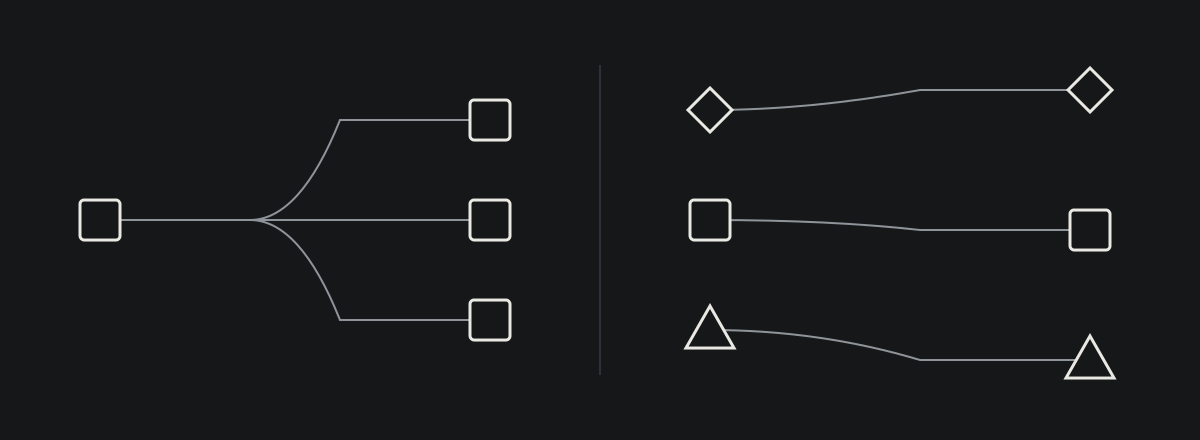
Schematic · not measured data Varying an answer and varying its starting point are different creative moves. Conceptual illustration, not measured data.
Sources in this version
- Generative AI enhances individual creativity but reduces the collective diversity of novel content ↗Published article; GPT-4 suggestions · Results: creativity ratings and story similarity; Materials and MethodsPublished 12 July 2024 · recorded in Atlas 23 October 2026
- Artificial intelligence and its impact on creativity and diversity: An empirical study of large language model-generated product ideas ↗OnlineFirst; Study 3b uses gpt-4o-2024-08-06 · Study 3b, Table 3; Study 2a similarity methodsPublished 22 July 2026 · recorded in Atlas 23 October 2026
- Human diversity fuels collective creativity that large language models cannot simulate or sustain ↗arXiv:2607.26899v1; gpt-4o-2024-08-06 · Methods; Figure 2; Supplementary Table S1Published 29 July 2026 · recorded in Atlas 23 October 2026
- Incentives shape how humans co-create with generative AI ↗arXiv:2604.03529v1; GPT5-mini, medium reasoning · Sections 3–5; exploratory Section 6; Appendix A.4Published 4 April 2026 · recorded in Atlas 23 October 2026
Where the sources sit in time.
A retrospective selection: publications used in this question and its discovery, ordered by their publication dates. This is a small historical overview, not a complete account of the field or evidence of a research trend.
Generative AI enhances individual creativity but reduces the collective diversity of novel content ↗
2024 publication; 293 UK writers and 600 evaluators. Published original read through a lawful public PDF mirror and metadata checked against UCL.
Incentives shape how humans co-create with generative AI ↗
Version 1 submitted 4 April 2026. 200 US/UK Prolific participants; no peer-reviewed version is claimed here.
Artificial intelligence and its impact on creativity and diversity: An empirical study of large language model-generated product ideas ↗
Publication date is not model date: Table 3 uses the August 2024 GPT-4o version and an earlier human comparison.
Human diversity fuels collective creativity that large language models cannot simulate or sustain ↗
Submitted 29 July 2026; participant task 11–15 March 2026. The preprint explicitly states that it has not undergone peer review.