The architecture includes who gets to decide.
An AI can shape a business decision before a human sees the approval screen. The CTO’s choices determine what gets proposed, checked, authorized and learned.
An important decision may happen before anyone clicks approve.
A fictional lighting company wants to launch a rechargeable desk lamp. Its AI assembles customer complaints, supplier specifications and margin estimates, then proposes a design, a price and a launch plan. The presentation takes minutes. The executive team still approves the launch.
But suppose the system ranked designs by margin on the initial sale, excluded a more repairable option and treated a supplier’s battery-life claim as established. The team can approve every slide without ever approving those choices. The person at the end of the workflow has formal authority; the process has already shaped what that person can see.
For a chief technology officer, these are architectural choices with commercial consequences. Which objectives enter the system? What evidence is required before a proposal becomes a commitment? Who may change either? The comparison below holds the model and source material constant while changing who makes the decisions.
The same AI can support two very different decision processes.
“Prepare a launch plan for a rechargeable desk lamp.”
Fictional company. Same model and available documents in both routes; only decision ownership and checkpoints change.
The team reviews a finished recommendation after key choices have already narrowed it.
Frame
AI defaults
Margin becomes the ranking objective; repairability drops out.
Compare
AI summary
Supplier claims and measured tests appear in one recommendation.
Commit
Executive approval
The team sees the shortlist, then purchasing receives an approved plan.
Access boundaryLearn
Sales report
Launch sales are recorded; rejected alternatives and assumptions are not.
A human approved the plan. The company still cannot tell which earlier choices deserved that approval.
Authored illustration, not a company case study, tested workflow or live AI run. It demonstrates a design choice, not a measured performance improvement.
Read both routes as text
Approve at the end
The team reviews a finished recommendation after key choices have already narrowed it.
- Frame · AI defaults. Margin becomes the ranking objective; repairability drops out.
- Compare · AI summary. Supplier claims and measured tests appear in one recommendation.
- Commit · Executive approval. The team sees the shortlist, then purchasing receives an approved plan.
- Learn · Sales report. Launch sales are recorded; rejected alternatives and assumptions are not.
A human approved the plan. The company still cannot tell which earlier choices deserved that approval.
Separate the decisions
Objectives, evidence and spending authority each have an identifiable owner.
- Frame · Business owner. Set margin and repairability requirements; retain alternatives.
- Compare · AI + technical reviewer. Generate options; check performance claims against actual tests.
- Commit · Budget owner + system. Approve a limited launch; enforce spending and publication permissions in tools.
- Learn · Cross-functional review. Compare outcomes with expectations; revisit assumptions before expanding.
More decisions are visible and contestable. Whether the extra review earns its cost still needs measurement.
A useful assistant can still make the next decision worse.
In a BCG experiment using June 2023 GPT-4, AI improved speed and quality on product-development tasks. In a separate analytical task, AI-assisted consultants were less likely to reach the correct answer. The published 2026 paper makes the distinction unusually visible: fluent advice and correct judgement can move apart.
Calling an entire department “AI-ready” tells us too little about what to delegate. In the lamp launch, generating designs, checking battery tests and authorizing a purchase need different evidence. A strong result on the first does not establish reliability on the others.
Faster production can move the bottleneck.
Imagine the lamp team produces ten times as many proposals while its engineers can still validate only the same number. More drafts could create a longer queue, rushed checks or more discarded work. The constraint has shifted from producing material to deciding what merits attention. This is a capacity argument, not a forecast of AI’s productivity effect.
The opportunity is larger than automating the existing queue. In the P&G field experiment, 791 professionals in Europe and the Americas took part in bounded innovation workshops. AI helped assisted participants bridge commercial and technical perspectives. That suggests a way to explore designs earlier across functions; it does not establish better launches or durable team learning.
A CTO should therefore ask where earlier access to expertise could remove a handoff, which checks can be automated reliably, and which need more human capacity. Measure the whole process: elapsed time to a useful release, defects, rework, customer outcomes and total cost. Drafts per employee cannot show whether it has improved.
Human control also has to earn its place.
“Keep a human in the loop” is an incomplete answer. In a US restaurant-inspection pilot, algorithms identified more violation-prone restaurants than inspectors’ rankings. Yet inspectors disproportionately followed their own priorities, limiting the potential gains. Hyunjin Kim and colleagues examined the pilot and interviewed 55 departments; they did not randomly assign alternative authority structures.
The result concerns predictive algorithms in one municipal setting, not generative agents. It offers a useful counterweight: discretion can correct a model or weaken a better recommendation. Neither automatic obedience nor automatic override is a sound default.
For the lamp company, record why a reviewer rejects an option and examine later outcomes where observable. Give reviewers original evidence, time and permission to stop a commitment. Give customers and employees a way to challenge decisions. A check that never changes anything deserves investigation; it does not prove that the system is flawless.
Own the ability to judge and change the system.
Buying a capable model does not require outsourcing the definition of good work. The lamp company’s valuable assets may include reliable product facts, test methods, customer access and evidence connecting design choices to returns. A CTO can buy generation while retaining the means to assess a result, switch suppliers and recover from failure.
That requires technical work: reliable integrations, access controls, versioned evaluations, records of tool actions and recovery procedures. A spending limit in a prompt is not an enforced permission. Replacing a model can change behaviour even when the interface stays the same, so important workflows need representative checks again.
NIST’s 2024 generative-AI profile recommends documented third-party dependencies, fallback arrangements and criteria for disabling systems. It is voluntary US guidance, not proof that any particular architecture works. Our practical implication is to test an exit before critical operations depend on a system: can the company retrieve its records, run a viable alternative and reconcile unfinished actions?
Self-hosting everything does not automatically create independence. It can exchange supplier dependence for maintenance work and reliance on scarce internal expertise. Keep the parts whose ownership improves differentiation or control; buy the parts whose replacement you can realistically manage.
Fund the business change and the foundations it needs.
The same launch connects three investment agendas. Operational AI could reduce work in supplier reconciliation and support. AI-assisted innovation could uncover a better design. AI-mediated commerce could change how an assistant discovers, compares and recommends the lamp. These opportunities need different success measures: reliable throughput, better validated products and qualified demand.
Shared product facts and a trustworthy test record could support all three. A universal company-wide agent platform may be unnecessary. Start from the commitments each workflow needs, then build the smallest common foundation that removes repeated work.
Brynjolfsson, Rock and Syverson’s productivity J-curve explains how investment in processes, skills and other intangible assets can precede visible returns. Their economic model and historical US analysis help explain a measurement problem; they do not make every slow AI project a future success.
Separate the cost of creating reusable capability from the cost and benefit of each use. Agree with finance how time saved becomes capacity, service quality or cash savings. Reserve room for experiments that could change the offer itself, and specify what evidence would stop them. Otherwise, efficiency projects with easily counted benefits can consume the entire innovation budget.
Preserve the expertise needed to supervise.
Lisanne Bainbridge’s 1983 analysis of industrial automation exposed a persistent tension: routine automation can remove the practice needed when a person must handle an abnormal situation. That is an analogy for AI work, not a measured generative-AI effect.
In the lamp company, senior engineers may catch a dubious battery claim because they have tested many products. A junior colleague who only approves generated summaries may never acquire that judgement. Training should include independent predictions, direct examination of evidence and unusual cases, alongside prompting skills. Which practice to retain depends on the decisions people will still own.
Knowledge sharing also has an incentive problem. If every documented improvement is treated as a reason to eliminate the contributor’s role, asking people to share failures and tacit expertise may produce silence. This is a design risk to investigate, not an assumption about employees. Leadership and HR need a credible account of how roles, recognition and gains will change.
Researchers disagree about what can be delegated.
A 2026 Strategy Science debate makes the disagreement explicit. Felipe Csaszar, at Michigan, argues that computational search and evaluation could expand strategic capability if outcomes become sufficiently verifiable. Teppo Felin, at Utah, argues that distinctive strategy depends on causal theories and actor-specific judgement that pattern-based systems cannot supply. These are competing scholarly positions, not settled boundaries.
The lamp company need not resolve that debate to act. Let AI surface options and objections; require an explanation of why this company could win, what would disprove it and which real-world observation comes next. Synthetic customer approval is a hypothesis about customers, not evidence from them.
For the CTO, this calls for several kinds of judgement: technical depth to investigate failures, experimental understanding to question a result, commercial understanding to recognize differentiation, and organizational skill to negotiate ownership. The title does not grant authority over every decision. Business leaders own objectives, finance owns agreed capital limits, and the CTO makes the technical commitments inspectable and enforceable.
Plan for several ways of working in 2030.
There is no evidence-based date when a company should become autonomous. Singapore’s April 2026 official release reported that 28.5% of covered private-sector firms had started adopting AI, while 3.8% were integrating it into core processes. Coverage was establishments with at least ten employees. This is a local, employer-reported snapshot, not a global maturity curve.
The paths below are conditional choices from a November 2026 starting point. A company could use all three at once in different workflows. More delegation earns its place when outcomes, recoverability and economics support it; a change in conditions can justify moving back.
AI assists people
- What the CTO builds for
- People retain decisions; AI prepares analysis, code and options. Prioritize usable context and review capacity.
- Evidence that would justify this choice
- Useful task-level gains, but sparse feedback or costly mistakes make broader delegation hard to evaluate.
AI connects workflows
- What the CTO builds for
- Specialist systems share records across functions. Prioritize reliable handoffs, ownership and end-to-end measurement.
- Evidence that would justify this choice
- Repeated work shows better outcomes after integration, including the cost of corrections and handovers.
AI acts within delegated limits
- What the CTO builds for
- Systems execute defined commitments. Prioritize enforceable limits, monitoring, reconciliation and tested recovery.
- Evidence that would justify this choice
- Representative live outcomes and failure exercises justify a specified scope; changes trigger reassessment.
Atlas scenarios, not predicted adoption rates. No path authorizes an AI to redefine business goals, spending rights or acceptable harm.
The CTO needs a mandate that can change with the evidence.
A strong objection is that much of this is simply good technology leadership: clear goals, reliable systems and thoughtful investment. That is partly right. AI makes these disciplines urgent when proposals become cheap, outputs vary and systems can move from recommending work to executing it. It does not make the CTO the company’s sole strategist.
Begin with one consequential workflow and a baseline that already has clear ownership and decent data. Compare the AI arrangement with that baseline on new work, tracking outcomes, review, failures and cost. Revisit the evaluation when the model or workflow changes. METR’s February 2026 update illustrates why: recruitment and task-selection problems made its newer developer-productivity data an unreliable estimate of the current effect.
For the first investment cycle, agree who may change workflows, who bears the downside, how spending is released and what triggers a stop. Use the next cycle to expand only where the evidence warrants it. Keep open the longer-term possibility of a different product or route to market, without treating the 2030 story as a spending commitment.
The CTO’s durable contribution is a company that can adopt a better capability without losing the ability to question it, change it or continue without it.
What supports the answer?
Reported finding: Capability varies across tasks
Reported findingIn the BCG analytical arm, unaided consultants more often selected the correct answer than either AI group.
Scope and conditions: One deliberately challenging task; June 2023 GPT-4; not current-model performance.
Independent evidence · origin, not a quality ratingSource passage · 2026Correctness: no AI 84.5%; GPT-4 70.6%; GPT-4 plus overview 60%.
Section 4.2, Figure 5 and Table 2 About the source and its versionReported finding: AI can bridge perspectives in a bounded task
Reported findingAI assistance helped commercial and R&D participants produce less functionally divided proposals.
Scope and conditions: One-day P&G workshops; no established effect on actual product launches or long-term expertise.
Vendor claim · origin, not a quality ratingSource passage · 2026791 randomized participants, Europe and Americas; company collaboration and co-authorship disclosed.
Sections 3.2 and 5.2; Figure 5 About the source and its versionReported finding: Better predictions need not become better decisions
Reported findingInspection staff favoured their own priorities over algorithmic recommendations, limiting potential gains.
Scope and conditions: One US city pilot; authority arrangements not randomized; non-generative algorithms.
Independent evidence · origin, not a quality ratingSource passage · 2023Published pilot and follow-up interviews distinguish prediction quality from implementation.
Sections 5.1–5.2 and 6 About the source and its versionMethod described: Returns can depend on complementary investment
Method describedThe productivity J-curve model accounts for intangible investments alongside new technology.
Scope and conditions: Historical US analysis and economic modelling; not a forecast of project profitability.
Independent evidence · origin, not a quality ratingSource passage · 2021Processes, human capital and other complements may precede measured returns.
Published abstract; working-paper introduction About the source and its versionMethod described: Fallback is part of system design
Method describedNIST’s 2024 profile recommends fallbacks, third-party incident plans and criteria for deactivation.
Scope and conditions: Voluntary institutional guidance; not a certification or measured performance result.
Independent evidence · origin, not a quality ratingSource passage · 2024The named 2024 guidance supports planning for failures and dependency changes.
GV-6.2-001, GV-6.2-003, GV-6.2-006 and MG-2.4 About the source and its versionAuthor hypothesis · not established: Supervision needs expertise that survives automation
Author hypothesis · not establishedBainbridge describes how automation can leave operators with difficult exceptions while removing routine practice.
Scope and conditions: 1983 industrial automation analysis; application to AI knowledge work is an Atlas analogy.
Independent evidence · origin, not a quality ratingSource passage · 1983Manual takeover and cognitive skills require use and feedback.
Sections 1.1.1 and 1.1.2, pp. 775–776 About the source and its versionAuthor hypothesis · not established: Strategic delegation remains disputed
Author hypothesis · not establishedCsaszar emphasizes verifiable computational strategy; Felin emphasizes causal theory and actor-specific judgement.
Scope and conditions: Attributed positions in a scholarly debate; neither is presented as settled fact.
Independent evidence · origin, not a quality ratingSource passage · 2026Contrasting arguments, not an experimental comparison or consensus.
Csaszar: Can AI Do Strategy? Yes—If We Make Strategy Verifiable; Felin: Why AI Cannot Do Strategy About the source and its versionMethod described: New tools may require new measurement designs
Method describedMETR judged its newer productivity data unreliable because of selection and measurement problems.
Scope and conditions: February 2026 update; no reliable present-day speedup is inferred.
Independent evidence · origin, not a quality ratingSource passage · 2026Recruitment, submitted tasks, changed pay and concurrent work complicated comparison.
Opening findings and Wider adoption of AI has made it more difficult to measure task-level productivity About the source and its versionReported finding: Starting adoption is different from core integration
Reported findingSingapore reported 28.5% had started adoption and 3.8% were integrating AI into core processes.
Scope and conditions: Both shares concern all covered private-sector establishments with at least ten employees; employer reporting, not causal evidence.
Independent evidence · origin, not a quality ratingSource passage · 2026April 2026 official release; not a global benchmark.
Key Findings, paragraph 2 and footnote 1 About the source and its version
Where this explanation stops.
- The CTO recommendations and 2030 paths are Atlas interpretations; the research does not test this complete leadership model.
- Studies concern particular tasks, models, organizations and geographies. They do not establish universal productivity gains or a timetable for autonomy.
- The launch routes are authored illustrations. Atlas has not run a company experiment or evaluated reader understanding.
What to take with you
Invest in the ability to evaluate and change complete workflows. Widen delegation only where outcomes, economics and recovery justify it.
Follow the answer back to its sources.
Browse 9 source records
Navigating the Jagged Technological Frontier: Field Experimental Evidence of the Effects of Artificial Intelligence on Knowledge Worker Productivity and Quality
Fabrizio Dell’Acqua, Edward McFowland III, Ethan Mollick, Hila Lifshitz, Katherine C. Kellogg, Saran Rajendran, Lisa Krayer, François Candelon and Karim R. Lakhani
Organization Science · Published original
Published in 2026; experiment used June 2023 GPT-4. 758 BCG consultants in two separate task arms; outside-frontier arm n=373. Figure 5 and section 4.2 checked.
DOI: 10.1287/orsc.2025.21838
Source passages, license and conditions ↗
The Cybernetic Teammate: A Field Experiment on Generative AI and Teamwork
Fabrizio Dell’Acqua, Charles Ayoubi, Hila Lifshitz, Raffaella Sadun, Ethan Mollick, Lilach Mollick, Yi Han, Jeff Goldman, Hari Nair, Stew Taub and Karim R. Lakhani
Organization Science · Published original
Published version checked, including Table 2 and sample footnotes. 826 attended; 35 nonrandomized excluded; 791 randomized professionals, 776 with complete post-task surveys. One-day virtual workshops at one multinational firm. Company co-authorship and institutional funding disclosed.
DOI: 10.1287/orsc.2025.20702
Source passages, license and conditions ↗
Decision authority and the returns to algorithms
Hyunjin Kim, Edward L. Glaeser, Andrew Hillis, Scott Duke Kominers and Michael Luca
Strategic Management Journal · Published original
First online 5 December 2023; April 2024 journal issue. Published version after 31 January 2024 appendix correction. Pilot in 2016; later inspection outcomes to spring 2022. Predictive algorithms, not generative AI.
DOI: 10.1002/smj.3569
Source passages, license and conditions ↗
The Productivity J-Curve: How Intangibles Complement General Purpose Technologies
Erik Brynjolfsson, Daniel Rock and Chad Syverson
American Economic Journal: Macroeconomics · Published original
Published journal abstract and authors’ working-paper description checked. Concerns complementary investment and measured productivity; no guarantee of returns to an individual AI project.
DOI: 10.1257/mac.20180386
Source passages, license and conditions ↗
Artificial Intelligence Risk Management Framework: Generative Artificial Intelligence Profile
Chloe Autio, Reva Schwartz, Jesse Dunietz, Shomik Jain, Martin Stanley, Elham Tabassi, Patrick Hall and Kamie Roberts
NIST AI 600-1 · Published original
July 2024 profile checked, including GV-6.2 and MG-2.4. NIST says AI RMF 1.0 is being revised; this is the named 2024 document, not a legal requirement or proof of effectiveness.
DOI: 10.6028/NIST.AI.600-1
Source passages, license and conditions ↗
Ironies of automation
Lisanne Bainbridge
Automatica · Published original
Original published paper, pp. 775–779. Industrial control and aviation examples; application to generative AI is an analogy, not a measured effect.
DOI: 10.1016/0005-1098(83)90046-8
Source passages, license and conditions ↗
Can AI Do Strategy? A Dialogue and Debate
Aaron Chatterji, Felipe A. Csaszar, James Evans, Teppo Felin, Jessica Hullman, Karim R. Lakhani, Mari Sako and Todd Zenger
Strategy Science · Published original
Contributions developed from an August 2025 conference; published March 2026. Csaszar and Felin sections checked. Their opposing positions are attributed arguments, not settled limits of AI.
DOI: 10.1287/stsc.2026.ed.v11.n1
Source passages, license and conditions ↗
We are Changing our Developer Productivity Experiment Design
Joel Becker, Nate Rush, Tom Cunningham, David Rein and Khalid Mahamud
METR · Published original
Update distinguishes early-2025 results from later data affected by recruitment, task-selection and timing problems. No reliable current speedup inferred.
Source passages, license and conditions ↗
Inaugural Release of Report on Adoption of Artificial Intelligence Among Firms
Ministry of Manpower, Singapore
Singapore Ministry of Manpower · Published original
Private-sector establishments with at least 10 employees in Singapore. 28.5% had started adoption; 3.8% of all covered firms integrating AI into core processes. Survey reporting, not causal evaluation or a global estimate.
Source passages, license and conditions ↗
How this version was checked
AI-reviewed by a separate editorial agent · 5 November 2026. The approval applies to revision 1, its text, visuals and source references.
Connects AI capability with the investment and decision rights needed to turn it into durable business value.
AI-reviewed by a separate editorial agent · Ask the editor
What changed, and why.
Changes across Atlas →This history comes from saved content versions. A new revision can be an editorial change; it does not by itself mean that the underlying facts changed.
First recorded version · revision 1
Explains the CTO’s changing AI responsibilities through a fictional product launch, original research and conditional operating choices for 2030.
No earlier reviewed assessment is available to compare. No change in the underlying facts is being claimed.
Available version records (1)
Revision 1 · First recorded version · reviewed
Explains the CTO’s changing AI responsibilities through a fictional product launch, original research and conditional operating choices for 2030.
Answer in this version
Compare complete workflows on new work, including review, failure recovery and the cost of keeping alternatives viable.
What remained unresolved
Longitudinal comparisons of alternative decision arrangements, with business outcomes, human skill, costs and reversals recorded.
Takeaway and scope
As AI takes on more work, a CTO must help decide which judgements can be delegated, what evidence justifies that authority and how the company can recover when a system fails. The role combines technical architecture with investment, expertise and decision rights; the business still owns its goals.
An argument about leadership grounded in research, not a validated CTO model or a forecast. The launch example is fictional.
Capability varies across tasks
In the BCG analytical arm, unaided consultants more often selected the correct answer than either AI group.
One deliberately challenging task; June 2023 GPT-4; not current-model performance.
AI can bridge perspectives in a bounded task
AI assistance helped commercial and R&D participants produce less functionally divided proposals.
One-day P&G workshops; no established effect on actual product launches or long-term expertise.
Better predictions need not become better decisions
Inspection staff favoured their own priorities over algorithmic recommendations, limiting potential gains.
One US city pilot; authority arrangements not randomized; non-generative algorithms.
Returns can depend on complementary investment
The productivity J-curve model accounts for intangible investments alongside new technology.
Historical US analysis and economic modelling; not a forecast of project profitability.
Fallback is part of system design
NIST’s 2024 profile recommends fallbacks, third-party incident plans and criteria for deactivation.
Voluntary institutional guidance; not a certification or measured performance result.
Supervision needs expertise that survives automation
Bainbridge describes how automation can leave operators with difficult exceptions while removing routine practice.
1983 industrial automation analysis; application to AI knowledge work is an Atlas analogy.
Strategic delegation remains disputed
Csaszar emphasizes verifiable computational strategy; Felin emphasizes causal theory and actor-specific judgement.
Attributed positions in a scholarly debate; neither is presented as settled fact.
New tools may require new measurement designs
METR judged its newer productivity data unreliable because of selection and measurement problems.
February 2026 update; no reliable present-day speedup is inferred.
Starting adoption is different from core integration
Singapore reported 28.5% had started adoption and 3.8% were integrating AI into core processes.
Both shares concern all covered private-sector establishments with at least ten employees; employer reporting, not causal evidence.
Explanation in this version
An important decision may happen before anyone clicks approve.
A fictional lighting company wants to launch a rechargeable desk lamp. Its AI assembles customer complaints, supplier specifications and margin estimates, then proposes a design, a price and a launch plan. The presentation takes minutes. The executive team still approves the launch.
But suppose the system ranked designs by margin on the initial sale, excluded a more repairable option and treated a supplier’s battery-life claim as established. The team can approve every slide without ever approving those choices. The person at the end of the workflow has formal authority; the process has already shaped what that person can see.
For a chief technology officer, these are architectural choices with commercial consequences. Which objectives enter the system? What evidence is required before a proposal becomes a commitment? Who may change either? The comparison below holds the model and source material constant while changing who makes the decisions.
Atlas illustration · no live transaction The same AI can support two very different decision processes.
“Prepare a launch plan for a rechargeable desk lamp.”
Fictional company. Same model and available documents in both routes; only decision ownership and checkpoints change.
The team reviews a finished recommendation after key choices have already narrowed it.
Frame
AI defaults
Margin becomes the ranking objective; repairability drops out.
Compare
AI summary
Supplier claims and measured tests appear in one recommendation.
Commit
Executive approval
The team sees the shortlist, then purchasing receives an approved plan.
Access boundaryLearn
Sales report
Launch sales are recorded; rejected alternatives and assumptions are not.
A human approved the plan. The company still cannot tell which earlier choices deserved that approval.
Authored illustration, not a company case study, tested workflow or live AI run. It demonstrates a design choice, not a measured performance improvement.
Read both routes as text
Approve at the end
The team reviews a finished recommendation after key choices have already narrowed it.
- Frame · AI defaults. Margin becomes the ranking objective; repairability drops out.
- Compare · AI summary. Supplier claims and measured tests appear in one recommendation.
- Commit · Executive approval. The team sees the shortlist, then purchasing receives an approved plan.
- Learn · Sales report. Launch sales are recorded; rejected alternatives and assumptions are not.
A human approved the plan. The company still cannot tell which earlier choices deserved that approval.
Separate the decisions
Objectives, evidence and spending authority each have an identifiable owner.
- Frame · Business owner. Set margin and repairability requirements; retain alternatives.
- Compare · AI + technical reviewer. Generate options; check performance claims against actual tests.
- Commit · Budget owner + system. Approve a limited launch; enforce spending and publication permissions in tools.
- Learn · Cross-functional review. Compare outcomes with expectations; revisit assumptions before expanding.
More decisions are visible and contestable. Whether the extra review earns its cost still needs measurement.
A useful assistant can still make the next decision worse.
In a BCG experiment using June 2023 GPT-4, AI improved speed and quality on product-development tasks. In a separate analytical task, AI-assisted consultants were less likely to reach the correct answer. The published 2026 paper makes the distinction unusually visible: fluent advice and correct judgement can move apart.
Calling an entire department “AI-ready” tells us too little about what to delegate. In the lamp launch, generating designs, checking battery tests and authorizing a purchase need different evidence. A strong result on the first does not establish reliability on the others.
Faster production can move the bottleneck.
Imagine the lamp team produces ten times as many proposals while its engineers can still validate only the same number. More drafts could create a longer queue, rushed checks or more discarded work. The constraint has shifted from producing material to deciding what merits attention. This is a capacity argument, not a forecast of AI’s productivity effect.
The opportunity is larger than automating the existing queue. In the P&G field experiment, 791 professionals in Europe and the Americas took part in bounded innovation workshops. AI helped assisted participants bridge commercial and technical perspectives. That suggests a way to explore designs earlier across functions; it does not establish better launches or durable team learning.
A CTO should therefore ask where earlier access to expertise could remove a handoff, which checks can be automated reliably, and which need more human capacity. Measure the whole process: elapsed time to a useful release, defects, rework, customer outcomes and total cost. Drafts per employee cannot show whether it has improved.
Human control also has to earn its place.
“Keep a human in the loop” is an incomplete answer. In a US restaurant-inspection pilot, algorithms identified more violation-prone restaurants than inspectors’ rankings. Yet inspectors disproportionately followed their own priorities, limiting the potential gains. Hyunjin Kim and colleagues examined the pilot and interviewed 55 departments; they did not randomly assign alternative authority structures.
The result concerns predictive algorithms in one municipal setting, not generative agents. It offers a useful counterweight: discretion can correct a model or weaken a better recommendation. Neither automatic obedience nor automatic override is a sound default.
For the lamp company, record why a reviewer rejects an option and examine later outcomes where observable. Give reviewers original evidence, time and permission to stop a commitment. Give customers and employees a way to challenge decisions. A check that never changes anything deserves investigation; it does not prove that the system is flawless.
Own the ability to judge and change the system.
Buying a capable model does not require outsourcing the definition of good work. The lamp company’s valuable assets may include reliable product facts, test methods, customer access and evidence connecting design choices to returns. A CTO can buy generation while retaining the means to assess a result, switch suppliers and recover from failure.
That requires technical work: reliable integrations, access controls, versioned evaluations, records of tool actions and recovery procedures. A spending limit in a prompt is not an enforced permission. Replacing a model can change behaviour even when the interface stays the same, so important workflows need representative checks again.
NIST’s 2024 generative-AI profile recommends documented third-party dependencies, fallback arrangements and criteria for disabling systems. It is voluntary US guidance, not proof that any particular architecture works. Our practical implication is to test an exit before critical operations depend on a system: can the company retrieve its records, run a viable alternative and reconcile unfinished actions?
Self-hosting everything does not automatically create independence. It can exchange supplier dependence for maintenance work and reliance on scarce internal expertise. Keep the parts whose ownership improves differentiation or control; buy the parts whose replacement you can realistically manage.
Fund the business change and the foundations it needs.
The same launch connects three investment agendas. Operational AI could reduce work in supplier reconciliation and support. AI-assisted innovation could uncover a better design. AI-mediated commerce could change how an assistant discovers, compares and recommends the lamp. These opportunities need different success measures: reliable throughput, better validated products and qualified demand.
Shared product facts and a trustworthy test record could support all three. A universal company-wide agent platform may be unnecessary. Start from the commitments each workflow needs, then build the smallest common foundation that removes repeated work.
Brynjolfsson, Rock and Syverson’s productivity J-curve explains how investment in processes, skills and other intangible assets can precede visible returns. Their economic model and historical US analysis help explain a measurement problem; they do not make every slow AI project a future success.
Separate the cost of creating reusable capability from the cost and benefit of each use. Agree with finance how time saved becomes capacity, service quality or cash savings. Reserve room for experiments that could change the offer itself, and specify what evidence would stop them. Otherwise, efficiency projects with easily counted benefits can consume the entire innovation budget.
Preserve the expertise needed to supervise.
Lisanne Bainbridge’s 1983 analysis of industrial automation exposed a persistent tension: routine automation can remove the practice needed when a person must handle an abnormal situation. That is an analogy for AI work, not a measured generative-AI effect.
In the lamp company, senior engineers may catch a dubious battery claim because they have tested many products. A junior colleague who only approves generated summaries may never acquire that judgement. Training should include independent predictions, direct examination of evidence and unusual cases, alongside prompting skills. Which practice to retain depends on the decisions people will still own.
Knowledge sharing also has an incentive problem. If every documented improvement is treated as a reason to eliminate the contributor’s role, asking people to share failures and tacit expertise may produce silence. This is a design risk to investigate, not an assumption about employees. Leadership and HR need a credible account of how roles, recognition and gains will change.
Researchers disagree about what can be delegated.
A 2026 Strategy Science debate makes the disagreement explicit. Felipe Csaszar, at Michigan, argues that computational search and evaluation could expand strategic capability if outcomes become sufficiently verifiable. Teppo Felin, at Utah, argues that distinctive strategy depends on causal theories and actor-specific judgement that pattern-based systems cannot supply. These are competing scholarly positions, not settled boundaries.
The lamp company need not resolve that debate to act. Let AI surface options and objections; require an explanation of why this company could win, what would disprove it and which real-world observation comes next. Synthetic customer approval is a hypothesis about customers, not evidence from them.
For the CTO, this calls for several kinds of judgement: technical depth to investigate failures, experimental understanding to question a result, commercial understanding to recognize differentiation, and organizational skill to negotiate ownership. The title does not grant authority over every decision. Business leaders own objectives, finance owns agreed capital limits, and the CTO makes the technical commitments inspectable and enforceable.
Plan for several ways of working in 2030.
There is no evidence-based date when a company should become autonomous. Singapore’s April 2026 official release reported that 28.5% of covered private-sector firms had started adopting AI, while 3.8% were integrating it into core processes. Coverage was establishments with at least ten employees. This is a local, employer-reported snapshot, not a global maturity curve.
The paths below are conditional choices from a November 2026 starting point. A company could use all three at once in different workflows. More delegation earns its place when outcomes, recoverability and economics support it; a change in conditions can justify moving back.
Three possible operating choices by 2030—not a maturity ladder AI assists people
- What the CTO builds for
- People retain decisions; AI prepares analysis, code and options. Prioritize usable context and review capacity.
- Evidence that would justify this choice
- Useful task-level gains, but sparse feedback or costly mistakes make broader delegation hard to evaluate.
AI connects workflows
- What the CTO builds for
- Specialist systems share records across functions. Prioritize reliable handoffs, ownership and end-to-end measurement.
- Evidence that would justify this choice
- Repeated work shows better outcomes after integration, including the cost of corrections and handovers.
AI acts within delegated limits
- What the CTO builds for
- Systems execute defined commitments. Prioritize enforceable limits, monitoring, reconciliation and tested recovery.
- Evidence that would justify this choice
- Representative live outcomes and failure exercises justify a specified scope; changes trigger reassessment.
Atlas scenarios, not predicted adoption rates. No path authorizes an AI to redefine business goals, spending rights or acceptable harm.
The CTO needs a mandate that can change with the evidence.
A strong objection is that much of this is simply good technology leadership: clear goals, reliable systems and thoughtful investment. That is partly right. AI makes these disciplines urgent when proposals become cheap, outputs vary and systems can move from recommending work to executing it. It does not make the CTO the company’s sole strategist.
Begin with one consequential workflow and a baseline that already has clear ownership and decent data. Compare the AI arrangement with that baseline on new work, tracking outcomes, review, failures and cost. Revisit the evaluation when the model or workflow changes. METR’s February 2026 update illustrates why: recruitment and task-selection problems made its newer developer-productivity data an unreliable estimate of the current effect.
For the first investment cycle, agree who may change workflows, who bears the downside, how spending is released and what triggers a stop. Use the next cycle to expand only where the evidence warrants it. Keep open the longer-term possibility of a different product or route to market, without treating the 2030 story as a spending commitment.
The CTO’s durable contribution is a company that can adopt a better capability without losing the ability to question it, change it or continue without it.
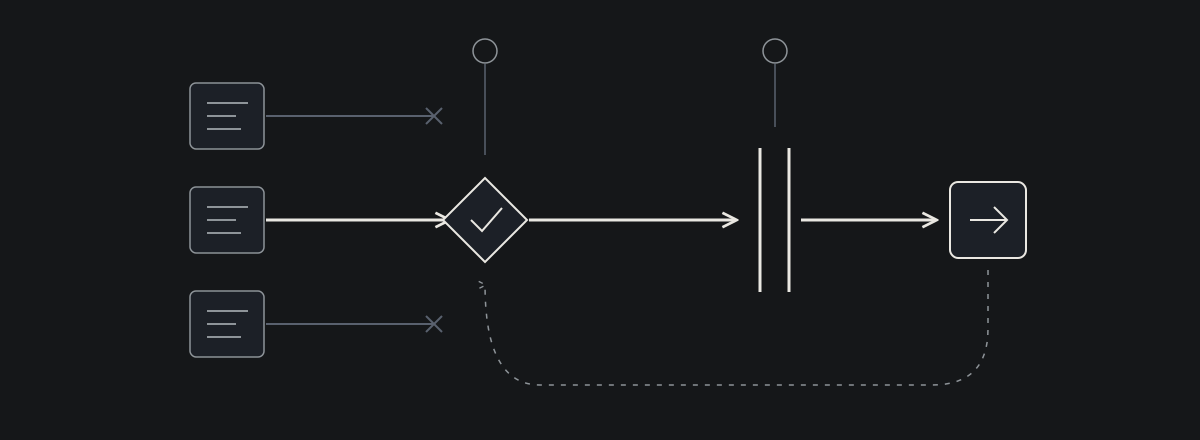
Schematic · not measured data Deciding what may become a commitment is part of the architecture.
Sources in this version
- Navigating the Jagged Technological Frontier: Field Experimental Evidence of the Effects of Artificial Intelligence on Knowledge Worker Productivity and Quality ↗Published original · Section 4.2, Figure 5 and Table 2Published 11 March 2026 · recorded in Atlas 5 November 2026
- The Cybernetic Teammate: A Field Experiment on Generative AI and Teamwork ↗Published original · Sections 3.2 and 5.2; Figure 5Published 12 June 2026 · recorded in Atlas 30 October 2026
- Decision authority and the returns to algorithms ↗Published original · Sections 5.1–5.2 and 6Published 5 December 2023 · recorded in Atlas 5 November 2026
- The Productivity J-Curve: How Intangibles Complement General Purpose Technologies ↗Published original · Published abstract; working-paper introductionPublished January 2021 · recorded in Atlas 5 November 2026
- Artificial Intelligence Risk Management Framework: Generative Artificial Intelligence Profile ↗Published original · GV-6.2-001, GV-6.2-003, GV-6.2-006 and MG-2.4Published 26 July 2024 · recorded in Atlas 5 November 2026
- Ironies of automation ↗Published original · Sections 1.1.1 and 1.1.2, pp. 775–776Published November 1983 · recorded in Atlas 5 November 2026
- Can AI Do Strategy? A Dialogue and Debate ↗Published original · Csaszar: Can AI Do Strategy? Yes—If We Make Strategy Verifiable; Felin: Why AI Cannot Do StrategyPublished 19 March 2026 · recorded in Atlas 5 November 2026
- We are Changing our Developer Productivity Experiment Design ↗Published original · Opening findings and Wider adoption of AI has made it more difficult to measure task-level productivityPublished 24 February 2026 · recorded in Atlas 5 November 2026
- Inaugural Release of Report on Adoption of Artificial Intelligence Among Firms ↗Published original · Key Findings, paragraph 2 and footnote 1Published 30 April 2026 · recorded in Atlas 5 November 2026