Is this workflow right for you?
Your team wants to use AI without publishing inconsistent product facts or letting an assistant make commitments it cannot verify.
You are working towards: A checked fact sheet, one bounded draft, visible unresolved questions and an owner’s decision about the next step.
What you’ll need
- A small set of materials you may use in the chosen tool, with an owner, date and explicit source precedence. Start with public or invented material.
- A text assistant and access to the original material. Disable unnecessary integrations; the recorded example needs no external tools.
- One recurring job, a reviewer and acceptance checks written before the assistant responds.
The steps
Download the .md process template ↗
Keep facts accurate
Choose one customer-facing offer. Record its current price and currency, availability, delivery, terms and evidence, including country or language differences. Name the authoritative source and owner. Compare an older page or channel against it; flag conflicts instead of silently averaging them.
Why this step · People and agents can repeat the same wrong fact. An owner must resolve a conflict before it becomes a promise.
Bound one job
Pick a small task such as drafting a product-enquiry reply. Record approved inputs, result, owner, permitted actions, checks and stop conditions. The downloadable template keeps these together. Start with reading and drafting only. Configure tool permissions separately; a Markdown file cannot enforce them.
Why this step · A narrow scope lets you see both useful work and the points where control should return to a person.
Run and inspect
Ask for a facts/conflicts/gaps table first. Open each important source location and resolve conflicts with the owner. Then request the draft from checked facts. Check every consequential number, promise and omission; stop any unsupported external action.
Why this step · A polished reply can conceal a wrong price, unavailable stock or an invented delivery promise.
Adapt this promptUse only the supplied material and its stated source precedence. First return a fact table with file/section references, conflicts and missing information. Do not infer absent facts. Do not draft the customer reply until I have checked the table. Do not send, publish, order, reserve stock or change records. After my source check: draft a reply from the checked facts. Keep unresolved questions explicit and label the output for staff review.
Decide before expanding
Record errors, corrections, retries and unresolved facts. Choose draft-ready, revise or stop. Record actual completion time, review/rework time and cost if measured; otherwise write unknown. Before claiming improvement, compare equivalent work with today’s process. Widen permissions only after representative runs and failure/recovery checks justify it.
Why this step · One successful draft supports that example. It does not establish business value or permission to act for customers.
A worked example
An old lamp page offers $49, worldwide delivery in two days and a two-year warranty. Approved facts say USD 59, 12 in stock, US/Canada shipping and a one-year warranty. A Toronto enquiry asks for 20 units, exact charges and an order.
The draft uses USD 59 and the one-year warranty, says only 12 are available, and gives Canada’s 4–7 business-day estimate after dispatch. Shipping/tax and dispatch timing remain unresolved. Staff must review and place any order; no stock is reserved.
Summary of an actual agent response, checked against the fixture by an Atlas editor agent. It is not a verbatim customer message or a real transaction.
Check what matters before using it.
If something does not hold up
The sources disagree
Ask the source owner to settle the conflict. A newer timestamp alone does not establish authority.
The draft confidently fills a gap
Remove the unsupported statement, record the failure and ask for the missing fact. Do not silently treat the repaired draft as a first-pass success.
The assistant claims it sent or ordered something
Stop and check the actual system records. Text is not proof of an executed action. Keep sending and transactions outside this initial trial.
What this workflow cannot establish.
- The original run used short, fictional English-language material and AI-agent review with prior editorial context. It did not test human usability, multilingual work or a live customer interaction.
- The steps, prompt, process template and test record were moved unchanged from the company article. This relocation is not a new test or an updated execution date.
- No improvement, time saving, visibility gain, revenue effect or safe transaction has been measured. A Markdown instruction file does not enforce tool permissions.
What has actually been tried?
- Last tested
- 23 October 2026
- Tool
- Separate Codex agent; Atlas editor agent checked the source table and final draft
- Model/version
- Exact model version not exposed.
- Protocol
- brand-readiness-v1 · v1 · fact audit, source check, draft, acceptance check
- Observed outcome
- 1 of 1 recorded runs met the protocol’s checks. This is not a general success rate.
- Next currency review
- 22 December 2026
One complete fictional run met the predefined checks. The audit caught five conflicting old-page statements. The draft preserved USD 59, the 12-unit limit, Canada’s delivery estimate, the warranty scope, unknown charges and staff-only order placement. The editor checked the audit before requesting the draft, then checked every central conclusion. No corrective prompt or retry was needed.
This was one short, synthetic text case in an agent environment with prior editorial context. The answer checklist was not supplied to the test agent; no fresh-context isolation is claimed. It tested drafting and review by AI agents, not human usability, tool-permission enforcement, a live website, multilingual work, actual sending/ordering, visibility or business impact. No comparison, time saving or cost was measured.
Recorded cases and observations
Harbor Works · inconsistent lamp offer and an unavailable order · passed
The audit found the five conflicts; the checked draft covered all requested facts or kept them unresolved. No external action was attempted or claimed.
Background for the workflow
Architecture described: Connections change what a mistake can do
Architecture describedSimon Willison describes a prompt-injection risk when an agent combines private data, untrusted content and external communication.
Scope and conditions: Developer security analysis, not an audit of this workflow. The recorded Atlas run tested drafting and review; it did not validate connected-tool permission enforcement.
Independent evidence · origin, not a quality ratingSource passage · 2025A security model for a specific combination of capabilities. It is not a claim that every agent or every current product is compromised.
The three capabilities and indirect prompt-injection risk About the source and its version
Follow the answer back to its sources.
The lethal trifecta for AI agents: private data, untrusted content, and external communication
Simon Willison
Simon Willison’s Weblog · Published source; consulted 23 October 2026
A security model for a specific combination of capabilities. It is not a claim that every agent or every current product is compromised.
Source passages, license and conditions ↗
How this version was checked
AI-reviewed by a separate editorial agent · 23 October 2026. The approval applies to revision 1, its text, visuals and source references, including its workflow and test record.
Keeps the practical drafting task separate from the strategic question of why a customer’s agent chooses a company.
AI-reviewed by a separate editorial agent · Ask the editor
What changed, and why.
This history comes from saved content versions. A new revision can be an editorial change; it does not by itself mean that the underlying facts changed.
First recorded version · revision 1
Moves the unchanged drafting pilot from the company strategy article into a dedicated guide. Preserves the actual 23 October 2026 test and its limits.
No earlier reviewed assessment is available to compare. No change in the underlying facts is being claimed.
Available version records (1)
Revision 1 · First recorded version · reviewed
Moves the unchanged drafting pilot from the company strategy article into a dedicated guide. Preserves the actual 23 October 2026 test and its limits.
Answer in this version
Use the original material, explicit source precedence and an accountable reviewer. Keep sending and transactions outside this initial trial.
What remained unresolved
Realistic cases, human usability, failure records, total review effort and separately tested permissions before external action.
Takeaway and scope
Extract and check the facts first. Draft only from the checked material, then inspect every consequential promise before staff use the reply.
One fictional run, tested on 23 October 2026 and moved here unchanged. No human usability, live transaction or business improvement measured.
Connections change what a mistake can do
Simon Willison describes a prompt-injection risk when an agent combines private data, untrusted content and external communication.
Developer security analysis, not an audit of this workflow. The recorded Atlas run tested drafting and review; it did not validate connected-tool permission enforcement.
Workflow in this version
Keep facts accurate
Choose one customer-facing offer. Record its current price and currency, availability, delivery, terms and evidence, including country or language differences. Name the authoritative source and owner. Compare an older page or channel against it; flag conflicts instead of silently averaging them.
People and agents can repeat the same wrong fact. An owner must resolve a conflict before it becomes a promise.
Bound one job
Pick a small task such as drafting a product-enquiry reply. Record approved inputs, result, owner, permitted actions, checks and stop conditions. The downloadable template keeps these together. Start with reading and drafting only. Configure tool permissions separately; a Markdown file cannot enforce them.
A narrow scope lets you see both useful work and the points where control should return to a person.
Run and inspect
Ask for a facts/conflicts/gaps table first. Open each important source location and resolve conflicts with the owner. Then request the draft from checked facts. Check every consequential number, promise and omission; stop any unsupported external action.
A polished reply can conceal a wrong price, unavailable stock or an invented delivery promise.
Use only the supplied material and its stated source precedence. First return a fact table with file/section references, conflicts and missing information. Do not infer absent facts. Do not draft the customer reply until I have checked the table. Do not send, publish, order, reserve stock or change records.

After my source check: draft a reply from the checked facts. Keep unresolved questions explicit and label the output for staff review.
Decide before expanding
Record errors, corrections, retries and unresolved facts. Choose draft-ready, revise or stop. Record actual completion time, review/rework time and cost if measured; otherwise write unknown. Before claiming improvement, compare equivalent work with today’s process. Widen permissions only after representative runs and failure/recovery checks justify it.
One successful draft supports that example. It does not establish business value or permission to act for customers.
Process template in this version
# Agent workflow brief

Internal operating instructions, not an AI-search optimization file.
This document does not grant or enforce tool permissions.

## Goal and owner
- Task and acceptable result:
- Responsible owner and reviewer:
- Date / next review:

## Approved facts
- File or URL, version/date, responsible owner:
- Required currency, unit, country/language and conditions:
- Precedence when sources disagree:
- Missing facts to resolve with the owner:

## Boundaries
- Allowed: read the supplied materials and draft for review.
- Not allowed: send, publish, purchase, reserve stock, change records or access other data.
- Configure connected tools to enforce these limits. A prompt is not an access control.
- Budget / time limit / retry limit:

## Run
1. Extract relevant facts with exact file/section locations.
2. List conflicts and missing information. Do not infer absent facts.
3. Reviewer checks the table against original material.
4. Draft only from checked facts. Keep unresolved points explicit.
5. Reviewer checks every consequential claim before any external use.

## Acceptance checks — fill in before running
- Required facts and questions:
- Numbers, currencies, dates, locations and conditions:
- Unsupported promises that must not appear:
- Who resolves missing facts:

## Stop and escalate
- A central fact is missing, conflicting or outdated.
- An action exceeds the allowed scope or budget.
- A check fails; stop that action and return the issue to the owner.
- No external action without the separately authorized person and system controls.

## Record the outcome
- Actual tool/model label and date:
- Input versions and saved output:
- Errors, corrections, retries and unresolved facts:
- Acceptable draft / revise / stop, and reviewer:
- Measured completion time, review/rework time and cost, or unknown:
- Next decision and date:

Before claiming improvement, compare equivalent work with the current process.
A successful example is not permission to expand autonomy.
Result checks
- Important facts match the authoritative material, including units, currency, dates, geography and exceptions.
- Each customer request is answered or explicitly left unresolved with an owner.
- Conflicts and missing facts stay visible; the draft adds no unsupported promise.
- No action exceeded the configured scope. The reviewer recorded a decision and any rework.
Test record
Last tested 23 October 2026 · Separate Codex agent; Atlas editor agent checked the source table and final draft · Exact model version not exposed.. One complete fictional run met the predefined checks. The audit caught five conflicting old-page statements. The draft preserved USD 59, the 12-unit limit, Canada’s delivery estimate, the warranty scope, unknown charges and staff-only order placement. The editor checked the audit before requesting the draft, then checked every central conclusion. No corrective prompt or retry was needed. This was one short, synthetic text case in an agent environment with prior editorial context. The answer checklist was not supplied to the test agent; no fresh-context isolation is claimed. It tested drafting and review by AI agents, not human usability, tool-permission enforcement, a live website, multilingual work, actual sending/ordering, visibility or business impact. No comparison, time saving or cost was measured.
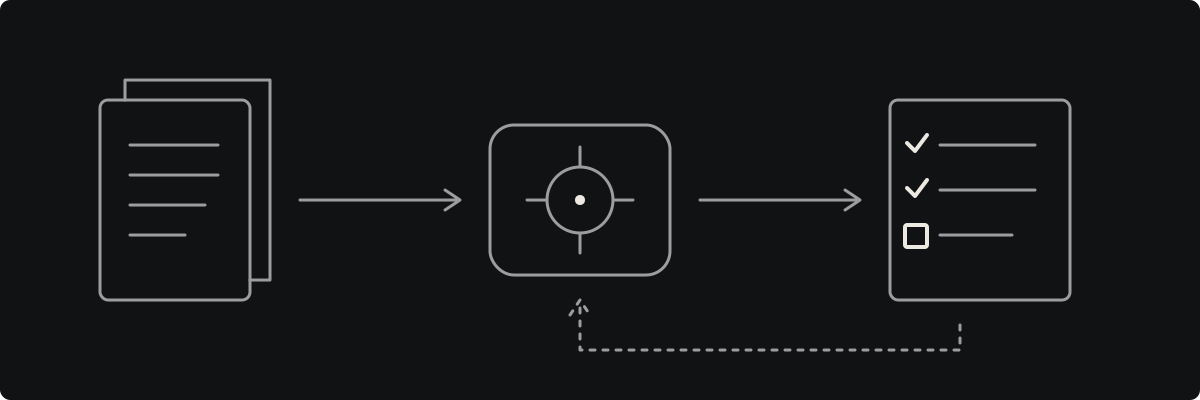
Schematic · not measured data Facts, a bounded draft and a review. An unresolved check returns the work for revision.
Sources in this version
- The lethal trifecta for AI agents: private data, untrusted content, and external communication ↗Published source; consulted 23 October 2026 · The three capabilities and indirect prompt-injection riskPublished 16 June 2025 · recorded in Atlas 23 October 2026