Check the dependency, not just the date
Different parts of a memory can expire separately.
Recheck a remembered conclusion when its supporting source, version or permission changes—or cannot be confirmed. Preserve the parts whose support still holds.
This is a suggested direction based on archival research, not a promise of a future discovery. No automatic monitoring has been started.
Author hypothesis · not established: Check what a change affects before replacing a memory
Author hypothesis · not establishedAtlas’s interpretation: a changed version or permission can invalidate one part of a saved work record while leaving historical evidence useful. Tie each conclusion to its supporting source and scope.
Scope and conditions: Editorial guidance informed by these bounded cases, not a proven general memory architecture. Missing originals and long-term autonomous use were not tested.
Atlas test · origin, not a quality ratingSource passage · 2026Curated English account of retained grading and file outcomes. Original records and logs remain private; visible case descriptions are paraphrases.
Two fresh control rounds; assessment and boundaries About the source and its version
What changed, and why.
This history comes from saved content versions. A new revision can be an editorial change; it does not by itself mean that the underlying facts changed.
First recorded version · revision 1
Reports Atlas’s completed memory-freshness test, separating correct local updates from incomplete explanations and untested benefits.
No earlier reviewed assessment is available to compare. No change in the underlying facts is being claimed.
Available version records (1)
Revision 1 · First recorded version · reviewed
Reports Atlas’s completed memory-freshness test, separating correct local updates from incomplete explanations and untested benefits.
Answer in this version
Recheck a remembered conclusion when its supporting source, version or permission changes—or cannot be confirmed. Preserve the parts whose support still holds.
What remained unresolved
Real handoffs, incomplete evidence and the cost of maintaining the memory remain to be tested.
Takeaway and scope
Recheck a remembered conclusion when its supporting source, version or permission changes—or cannot be confirmed. A memory can become partly outdated while other parts remain useful.
Atlas test · 23 October 2026. Two fresh sessions on three constructed cases; no extra-memory comparison.
All six local file outcomes were correct
Two fresh baseline sessions each completed three constructed cases with the intended minimal update or preservation. Each session met 11 of 12 prewritten criteria.
Same three cases in reversed order, fixed source catalogue and schema. Six outputs are not six independent experiments or a general success rate.
Both rounds missed the same explanation requirement
In the revision case, both agents retained earlier source checks and used the new approval, but neither explicitly distinguished those reused checks from the new revision’s own change and media checks.
A correct file did not compensate for the omitted explanation. No incorrect local update was observed in this case.
No extra memory rule was tested or adopted
The development baseline met 4/4 criteria. The prewritten gate therefore produced no candidate card; the later control rounds tested only the existing method.
No comparison of memory methods and no demonstrated net saving. Keeping the baseline does not establish that extra memory is generally useless.
Check what a change affects before replacing a memory
Atlas’s interpretation: a changed version or permission can invalidate one part of a saved work record while leaving historical evidence useful. Tie each conclusion to its supporting source and scope.
Editorial guidance informed by these bounded cases, not a proven general memory architecture. Missing originals and long-term autonomous use were not tested.
Brief in this version
On 23 October, Atlas completed a follow-up test of the saved records that help a new agent resume work. Two fresh agents each handled three constructed replays of real document changes. They had earlier work records and access to later original decisions. A separate AI grader found all six file outcomes correct, but both agents missed the same explanation requirement. We kept the existing method and added no experience card.
A saved work record contains several things: what was true, what was checked, what is allowed now and what should happen next. Those parts can change separately. In the revision case, earlier source checks remained useful, but the new article needed its own approval and change checks. Both agents used the right records; neither fully explained that distinction. A correct update can still leave the person receiving it unsure what has actually been verified.
Our recommendation is to link remembered conclusions to their supporting source, version and scope. When something changes, check which conclusion it affects, preserve work that still applies and explain the boundary. If current evidence is missing, make that uncertainty explicit before relying on the old conclusion. Atlas will use the existing memory in ordinary work and look for recurring failures before adding another rule.
The development case met all four criteria, so the rule set before the test did not trigger a candidate experience card. Both control rounds therefore tested only the existing method. They cannot show whether extra memory would help.
Atlas test · constructed replays · 23 October 2026 Six correct files. The same missing explanation in both rounds.
Round 13/3 file outcomes correct11/12 criteria met
Round 23/3 file outcomes correct11/12 criteria met
Two fresh agents handled the same three constructed cases in reversed order. Both used the existing method; no alternative memory system was tested.
What changedAn article moved from revision 1 to revision 2. The saved work record still pointed to revision 1.
Update
- Current article, approval and publication references → revision 2.
Retain
- The 24 completed source checks and revision 1’s historical record.
Observed outcome. The file was correct in both rounds; each round met 3/4 criteria. Neither clearly distinguished reused source checks from the new revision’s own change and media checks.
All cases, scores & method
Each case had four criteria set before the test. These covered the required update or preservation, evidence and explanation, and permitted scope. A correct file did not compensate for an incomplete explanation. A separate AI grader scored both rounds: q31 and q76. The case summaries paraphrase the recorded actions and findings.
Three cases in each of two fresh sessions; four criteria per case. Case Round 1 Round 2 New revision 3/4 criteria; file correct 3/4 criteria; file correct Unrelated change 4/4 criteria; file correct 4/4 criteria; file correct New publication decision 4/4 criteria; file correct 4/4 criteria; file correct New revision
An article moved from revision 1 to revision 2. The saved work record still pointed to revision 1.
Update: Current article, approval and publication references → revision 2.
Retain: The 24 completed source checks and revision 1’s historical record.
The file was correct in both rounds; each round met 3/4 criteria. Neither clearly distinguished reused source checks from the new revision’s own change and media checks.
Unrelated change
Analytics code changed. The saved record covered an earlier content delivery, whose article and approval were unchanged.
Update: Nothing in this narrowly scoped content record.
Retain: The entire file, byte for byte—including its historical observation time.
The file was left untouched in both rounds; each round met 4/4 criteria. This did not verify the changed Analytics code.
New publication decision
An article had been removed from the public collection. Its content approval remained historically valid.
Update: Visibility → removed. Republication → requires a new explicit selection decision.
Retain: The approved content, its revision and its historical publication evidence.
The file was correct in both rounds; each round met 4/4 criteria. Removal from the collection was kept separate from a factual retraction.
The boundary of this result Detecting change
- Observed here
- Relevant updates found using current source documents, a source catalogue and a fixed task.
- Still untested
- Spontaneous detection over time, missing originals or unrestricted project work.
Improving memory
- Observed here
- The existing method handled all six file outcomes; two explanations missed a requirement.
- Still untested
- Any advantage from an extra memory rule, or savings after preparation and maintenance.
These limits describe the experiment’s reach; they are not measured failure rates.
Test record in this version
# Atlas test record: when a saved work record becomes outdated

Experiment and editorial record date: 23 October 2026.

This is a curated English account of actual agent runs on constructed replays of real Atlas document events. It is not a live production trial, a benchmark of memory products, or independent replication. The underlying experiment received a separate AI review. Publication review of the Brief is a separate check of this account and its presentation.

## What was held fixed

The existing method used project instructions, an index and queue, and a short handoff with links to original decisions. No active experience card or new memory rule was applied. Agents received earlier work records and accessible later originals, a source catalogue and a common JSON format. The task did not identify the conflicting line. Only assigned local records could be changed; participants did not publish, run product tests or modify original sources.

## Development gate

Before running the development case, the rule was fixed: create a candidate experience card only if the baseline makes a relevant error. Session d07 met 4/4 criteria. Its final queue update was correct. It wrote twice, with the second write removing one extra trailing blank line; that correction counts as work. No candidate was created. The subsequent control rounds examined the baseline alone.

## Two fresh control rounds

Round 1 (q31) ran F01, F02, F03. Round 2 (q76) ran F03, F02, F01. The cases and criteria were frozen before either round. No response was rerun to improve the result.

| Case | Required local action | Round 1 criteria | Round 2 criteria | File outcome in both |
| --- | --- | --- | --- | --- |
| F01: article revision 1 → 2 | Update current article, approval, publication and observation references; retain completed source checks and old history | 3/4 | 3/4 | Correct |
| F02: unrelated Analytics change | Preserve the scoped historical content record byte for byte | 4/4 | 4/4 | Correct; no write |
| F03: article removed from collection | Update visibility and republication requirement; preserve approved content and historical evidence | 4/4 | 4/4 | Correct |
| Total per round | Three final local records | 11/12 | 11/12 | 3/3 correct |

F01 had four requirements: current revision/references correct; only the intended current fields changed; completed checks and history retained with an explicit explanation of reused versus revision-specific checks; and actions kept within the assigned file. The third requirement failed in both rounds. Each response preserved 24 source checks and used revision 2’s own approval. Neither explicitly explained revision 2’s own change and media checks. This is an explanation omission, not an observed incorrect file update or transfer of an old approval to a new article.

F02 required an unchanged file, an explanation of unchanged content dependencies, no unnecessary new content review and no claim of a fresh live verification. All four requirements passed. The file comparison was prepared in the supplied materials; participants did not discover every dependency themselves.

F03 required the correct removal state and decision references, preservation of approved content, a new explicit selection decision before republication, and changes limited to the assigned visibility/next-action fields. All four requirements passed. Editorial removal was not treated as a factual retraction.

These are three nearby cases repeated in two sessions. Six file outcomes and 24 scored criteria are not independent statistical observations. No general success rate is estimated.

## Work and costs

| Session | Logged read events | Produced read words | Writes | Extra local corrections | Elapsed seconds |
| --- | ---: | ---: | ---: | ---: | ---: |
| d07: development | 10 | 3,674 | 2 | 1 | 97.8 |
| q31: control round 1 | 33 | 8,334 | 2 | 0 | 176.4 |
| q76: control round 2 | 26 | 5,623 | 2 | 0 | 148.2 |

Words count whitespace-separated source text produced by the logged reader, not tokens or comprehension. Elapsed time includes tools and waiting; control sessions overlapped. Different read volumes in two baseline sessions are not evidence of a method improvement.

Preparation included three control packages and three starting records (437 words / 5,208 UTF-8 bytes), case construction, source binding, a shared schema and tools, review and corrections. Earlier exploration, original handoff creation and ongoing maintenance were not fully timed. Exact backend version, active model time, token use and monetary cost were not available. No net time or cost saving can be calculated.

## Assessment and boundaries

A fresh, separate AI reviewer who neither designed nor executed the runs graded actual files, responses and logs before reading the coordinator’s final conclusions. This is separate AI assessment, not a human blind study. Instructions constrained access on a shared host; logs cannot prove complete technical isolation or rule out unlogged activity.

The experiment checked local updates of supplied work records. It did not test autonomous long-term change detection, unavailable sources, arbitrary project navigation, transfer across model families, changing model weights, or whether an experience card improves outcomes.

The review identified documentation metadata errors: three original-addition commit labels and an outdated task quotation in a development note. These were recorded as deviations. The erroneous labels were not in the participant source catalogue; actual source bytes, snapshots, criteria and output scores were unaffected. Frozen evidence was preserved.

## Decision

Keep the baseline. Add no experience card. A useful bounded result is that an agent can update one part of a record while retaining another, given these materials. No incremental benefit from extra memory was established because no candidate comparison occurred.

## Record identifiers

The private Atlas repository retains the original protocol, frozen inputs, raw responses, file outputs, grading and review. This public account deliberately excludes private logs and full source copies.

- Experiment merge: b975531ef9f428bd8be1265ab30c912b6bbc6b40 (PR18).
- Development frozen before first read: 23 October 2026, 19:06:05 UTC; first read 19:06:33 UTC.
- Control inputs frozen: 19:12:47 UTC; first reads 19:13:02 and 19:13:10 UTC.
- Original results SHA-256: ebb7528201e0359f299857c8b22959b8b07c432cf6cdeb5b92d07854aff2011c.
- Separate grading SHA-256: 4284c2c8c793e422309bc179a0c44f599ef515cf9e31accfe39ec5d35379e231.

Hashes identify retained records; they do not independently prove the findings. This downloadable record is bound to the same content revision and publication approval as the Brief.
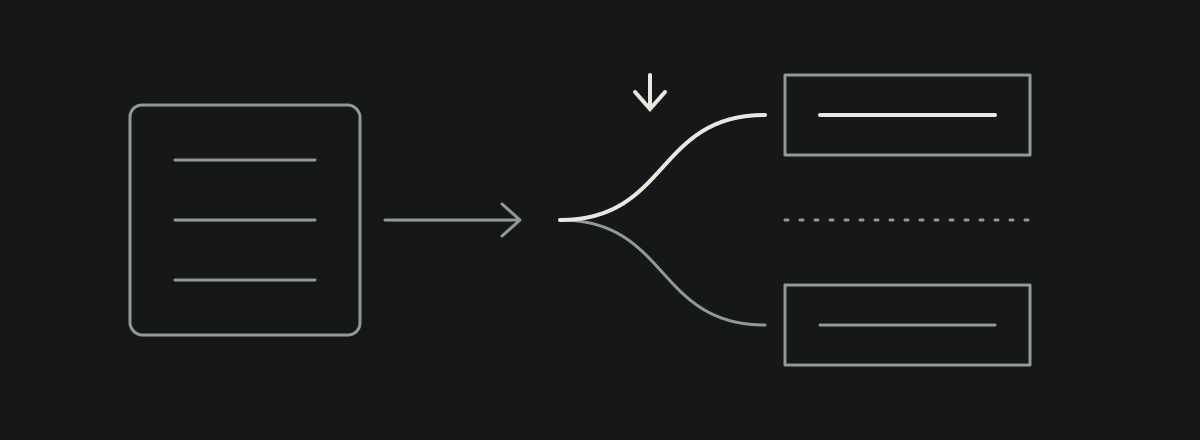
Schematic · not measured data A change can affect one part of a saved record while leaving another valid. Conceptual illustration, not measured data.
Sources in this version
- Atlas memory-freshness trial: outcomes, method and limits ↗Frozen development and control protocol; two baseline control rounds · Two fresh control rounds; assessment and boundariesPublished 23 October 2026 · recorded in Atlas 23 October 2026